
Choosing a fall detection solution for care facilities is not just a technology decision. In hospitals, clinics, nursing homes, senior residences and medical-social environments, the right system must support faster intervention while respecting privacy, dignity and staff workflows.
đ Get my free checklist
Protect my loved one in under 5 minutes
What is a fall detection solution for care facilities?
A fall detection solution for care facilities is a system designed to identify when a patient, resident or vulnerable person may have fallen and alert staff quickly enough to support timely intervention.
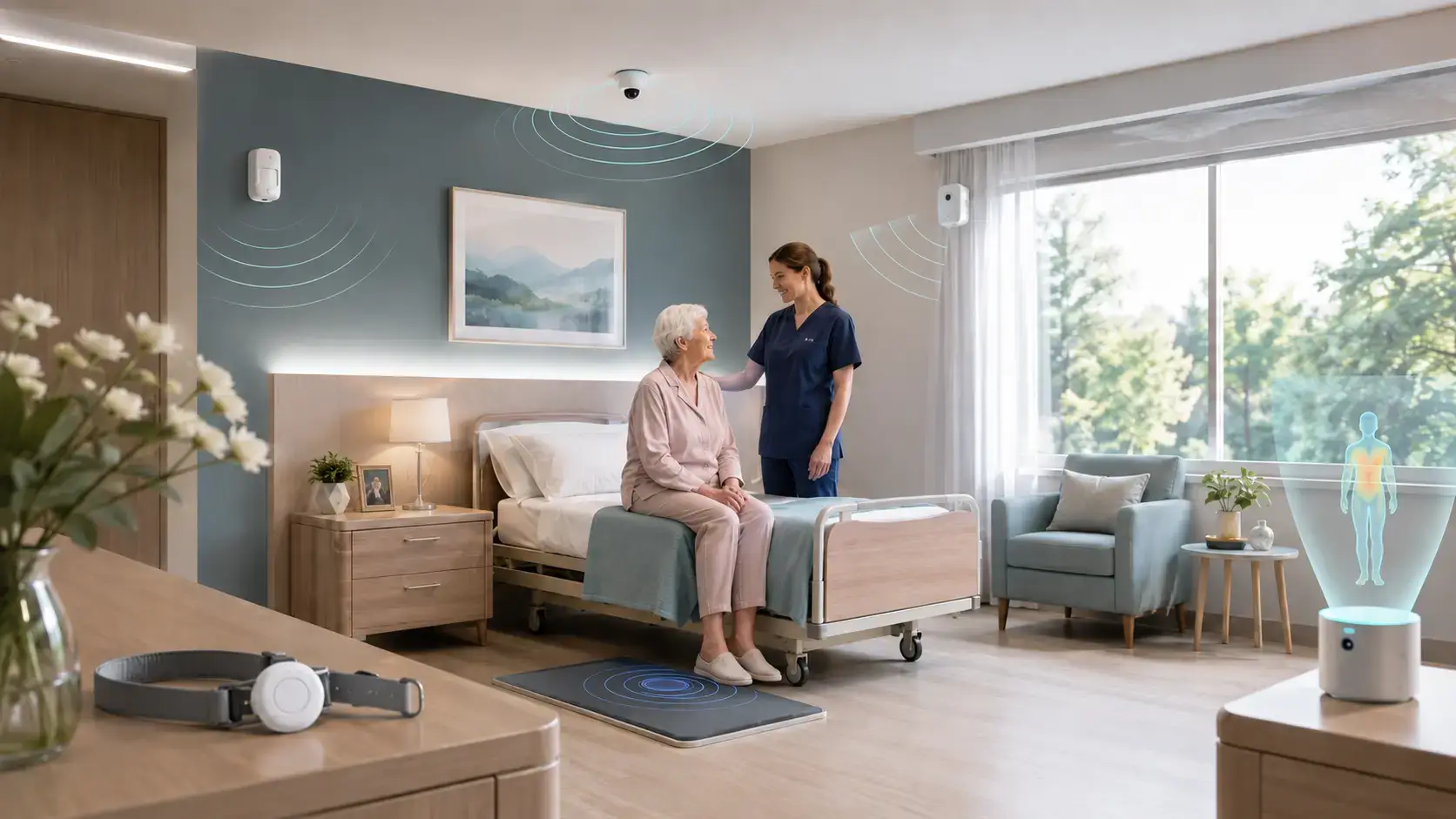
These systems may rely on wearables, bed mats, floor sensors, video cameras, radar, audio analysis, thermal sensing or multi-sensor detection. The best choice depends on the care environment, risk profile, room layout, staffing model and data protection requirements.
Key takeways
- A strong fall detection system should work in real-life care conditions, not only in demonstrations.
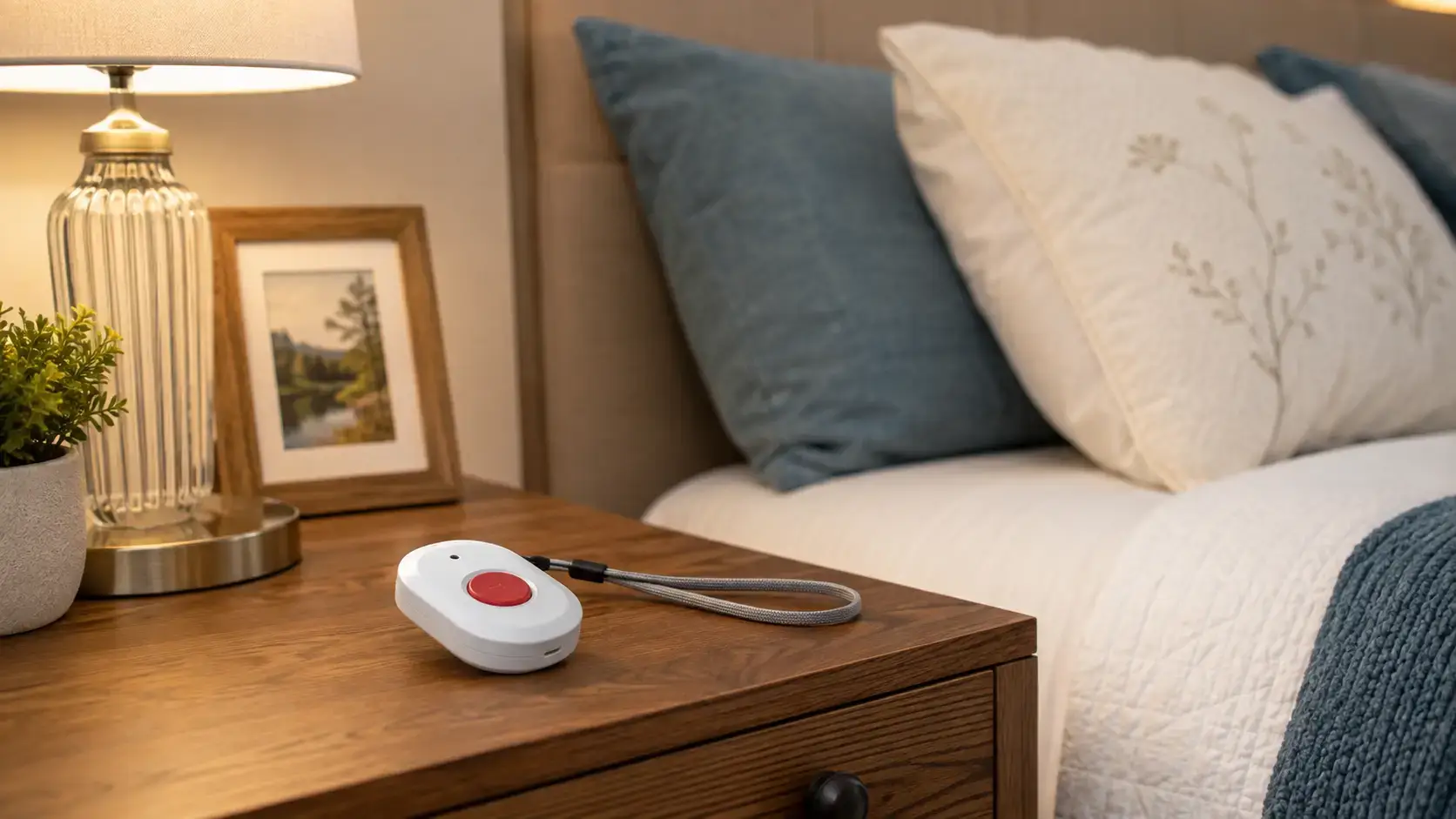
- Wearables depend on compliance and may fail when they are not worn or activated.
- Video-based systems can provide context but raise privacy and consent concerns.
- Single-sensor solutions may miss important context or create unnecessary alerts.
- Multi-sensor systems can help qualify alerts by combining movement, posture, presence, sound and environmental signals.
Why this decision matters in healthcare and care environments
Falls remain a major safety issue for older adults and vulnerable individuals. The World Health Organization identifies falls as the second leading cause of unintentional injury deaths worldwide.
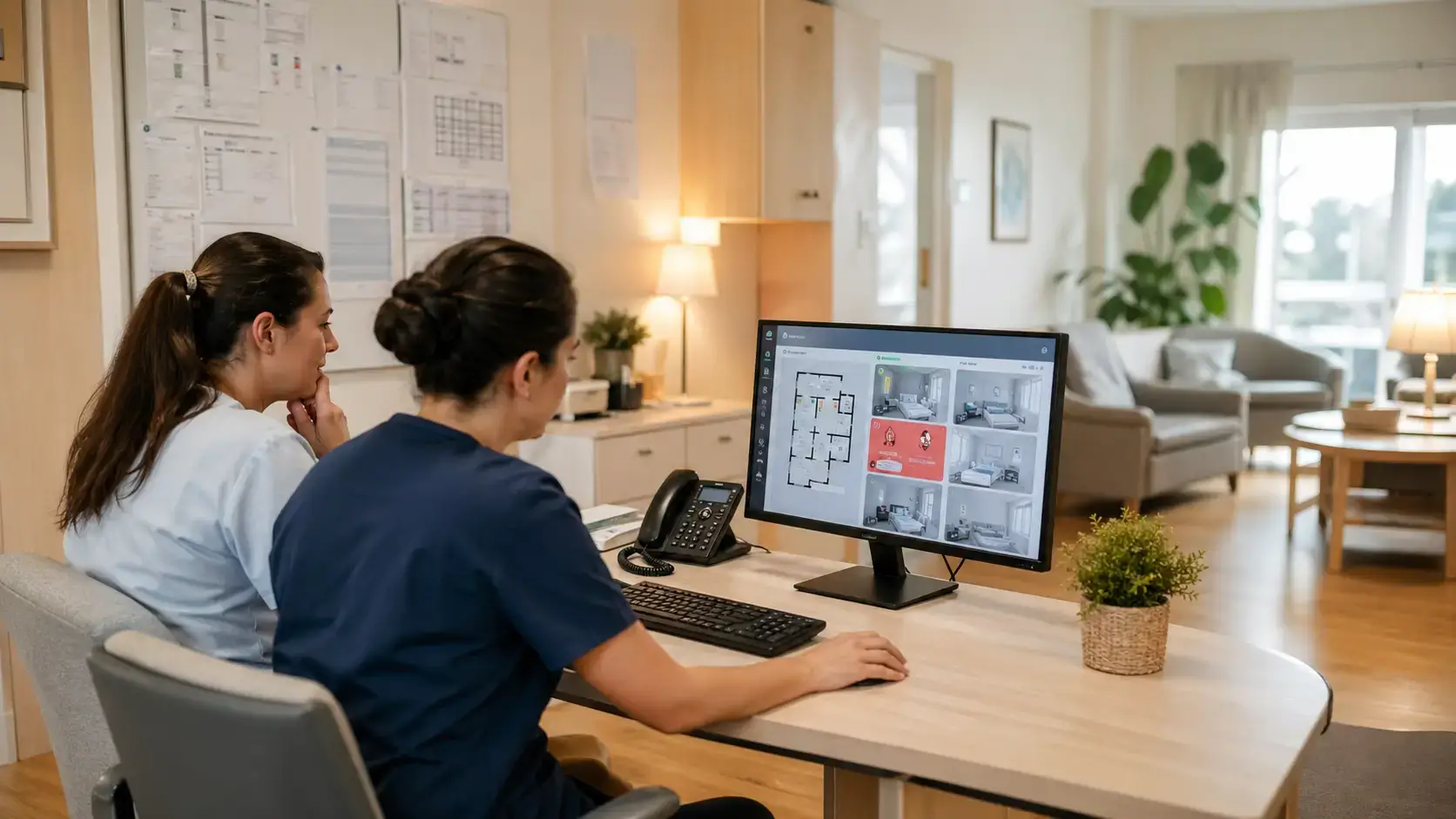
In care facilities, the key challenge is often the delay between the incident and staff response. A person may fall between two rounds, remain on the floor, be unable to press a button or call for help without being heard.
This is why organizations such as ANAP in France now map digital solutions for fall prevention and detection, helping healthcare and medical-social facilities compare available technologies before investing.
Technology comparison: what to check
| Technology | Main strength | Key limitation | Best question to ask |
|---|---|---|---|
| Wearable pendant or bracelet | Simple and familiar | Must be worn, charged and activated | What happens if the person does not wear it? |
| Bed mat or floor sensor | Useful for specific zones | Limited room coverage | Which scenarios are not covered? |
| Video-based AI camera | Rich visual context | Privacy and consent concerns | Is video acceptable in private rooms? |
| Radar sensor | Detects presence and movement without images | May lack context alone | How are false alerts reduced? |
| Audio detection | Can identify cries, impacts or alarms | Sensitive to noise | Can it distinguish between a real distress call and background noise (e.g. TV, radio)? |
| Thermal sensing | Detects posture without identifiable video | Needs interpretation | Can it distinguish normal posture from risk? |
| Multi-sensor system | Combines several signals | Requires strong integration | How does the system qualify an alert? |
Buyerâs checklist before selecting a provider
Before investing, care facilities should compare:
- Detection reliability in real rooms and real workflows;
- False alarm rates and alert qualification;
- Impact on night shifts and care teams;
- Patient, resident and family acceptance;
- Privacy-by-design and data minimization;
- Offline operation during internet outages;
- Integration with nurse call or care management systems;
- Incident documentation after an alert;
- Scalability across rooms, units and multiple sites;
- Pilot methodology and success criteria.
What to test during a pilot
A pilot should not only measure whether the system âdetects falls.â It should assess whether alerts are useful, understandable and actionable for staff.
Key questions include: How fast are alerts delivered? How many are false or unclear? Can staff trust the system after several weeks? Does it reduce blind spots without adding cognitive load? Can incidents be documented without intrusive monitoring?
Follow NestSentinel
Fall detection technologies are evolving rapidly, but the most valuable solutions are those that fit real care environments: reliable, non-intrusive, privacy-conscious and simple enough to support staff in daily operations.
NestSentinel is developing non-intrusive prevention technologies designed to help care facilities identify risk situations earlier while preserving dignity and privacy.
đ If you manage a hospital, clinic, nursing home, senior residence or medical-social facility, you can compare your current fall detection approach, assess pilot readiness or discuss how non-intrusive multi-sensor prevention could fit your environment.
Sources and references
- World Health Organization – Falls fact sheet.
- SantĂ© publique France – Fall-related hospitalizations and mortality among people aged 65 and over.
- ANAP – Panorama of digital solutions for fall prevention and detection among older adults.
- CDC – Older adult fall prevention facts and data.
FAQ: about fall detection solutions
What is the best fall detection solution for care facilities?
There is no universal best solution. The right choice depends on patient or resident profiles, privacy expectations, staff workflows and the facilityâs risk level.
Are cameras required to detect falls?
No. Radar, thermal sensing, audio analysis and multi-sensor systems can support fall detection without standard video cameras.
Why are wearables sometimes insufficient?
They rely on being worn, charged and activated. Some people may forget them, remove them or be unable to press a button after a fall.
What should be included in a fall detection pilot?
A strong pilot should measure detection quality, false alarms, response time, staff adoption, privacy acceptance and integration with existing workflows.