
Alert systems play an essential role in resident safety in nursing homes and care environments. But when they generate too many false positives, they can lose effectiveness, exhaust care teams, and weaken trust in surveillance systems.
What is a false positive in a surveillance system?
A false positive is an alert triggered when no genuinely dangerous situation requires intervention.
In a nursing home or care environment, this may happen when a fall alert is triggered even though the resident simply sat down quickly, leaned forward, moved an object, or made a movement that the system misinterpreted. The issue is not only technical: it becomes organizational, human, and operational.
Key takeaways
Why are false positives dangerous?
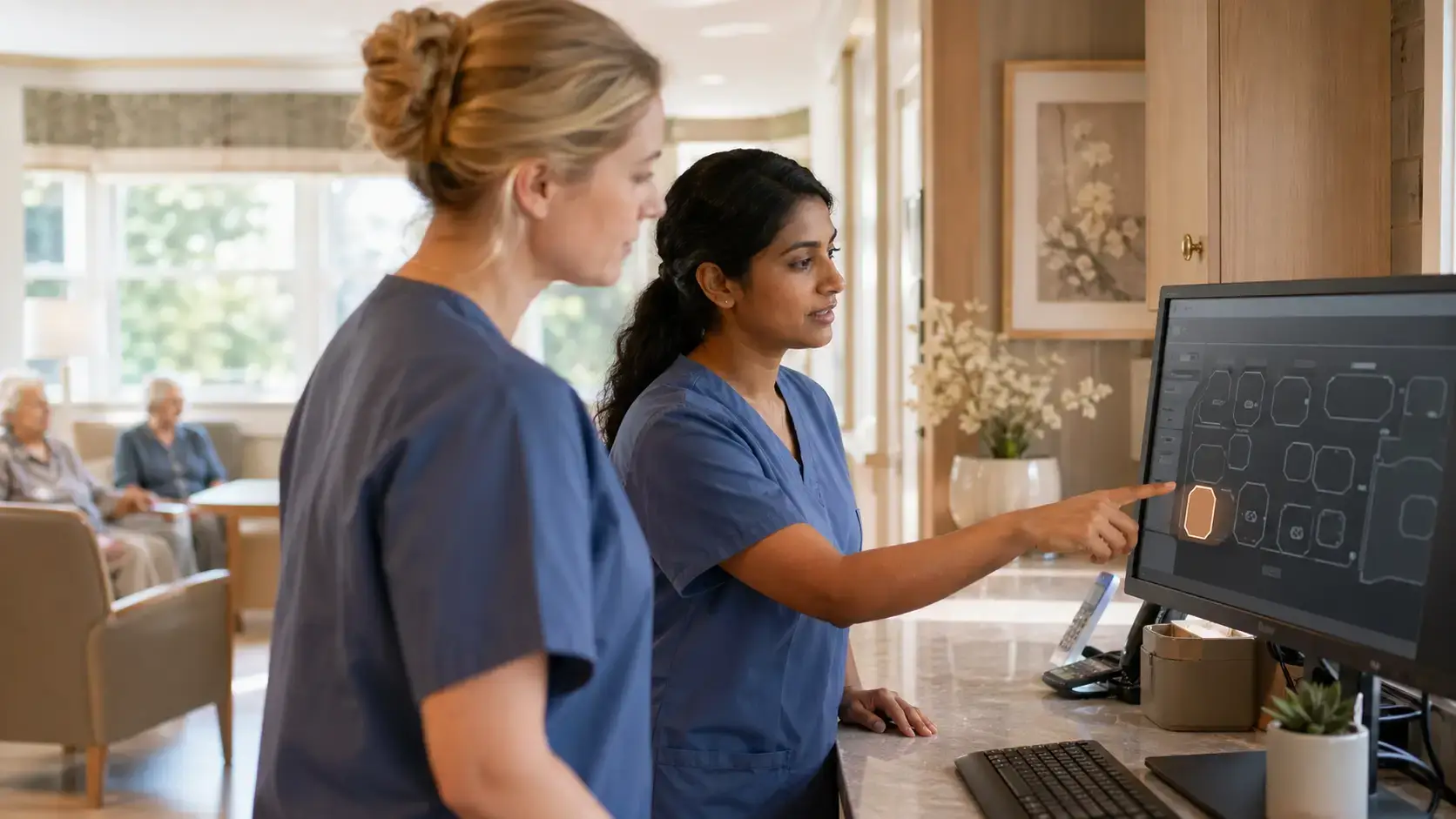
In care environments, alerts are essential. They help professionals respond quickly, prioritize interventions, and protect vulnerable individuals.
But when a system alerts too often for non-critical events, it can create the opposite effect: teams become desensitized. This is known as alarm fatigue. It occurs when caregivers are exposed to a high volume of alarms, which can lead to delayed responses or missed alerts.
Even though nursing homes are not intensive care units, the risk is similar: the more useless an alert seems, the less seriously it is taken. Over time, this can weaken organization, increase mental workload, and reduce trust in systems designed to improve safety.
Why this is a challenge for all care environments
Seniors and vulnerable individuals are often more exposed to fall risks because of age, reduced mobility, cognitive disorders, medication, or multiple health conditions.
This challenge is not limited to nursing homes. It also affects senior residences, medical-social facilities, healthcare structures, hospital departments, and more broadly any place where vulnerable people may be alone, immobilized, or in difficulty.
In these contexts, facility managers are not just looking for a system that “detects.” They are looking for a reliable solution capable of distinguishing a real critical situation from a normal everyday event.
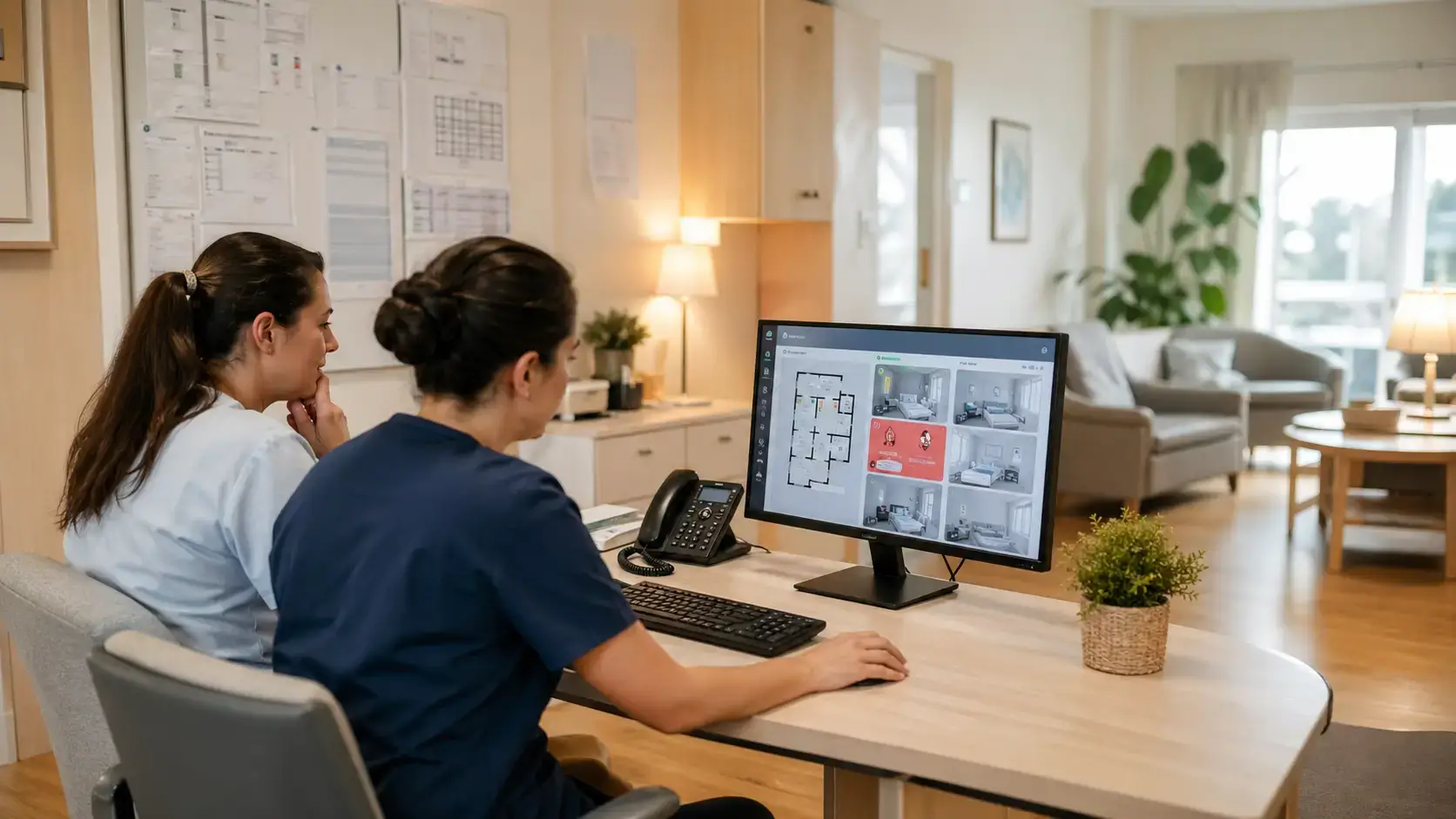
The limits of current surveillance systems
Toward more reliable and useful alerts
Discover RoomGuardian by NestSentinel
False positives can quickly undermine confidence in fall-detection systems and create unnecessary pressure for care teams. More alerts do not necessarily mean better protection—the priority is to generate alerts that are relevant, contextualized and actionable.
This is the approach behind RoomGuardian. By combining several non-intrusive sensing technologies with locally processed AI, it is designed to analyse situations in context and better distinguish a potential fall from ordinary daily activity.
Discover how RoomGuardian aims to reduce unnecessary alerts while helping care teams identify genuine risk situations—without video cameras, wearables or action required from residents.