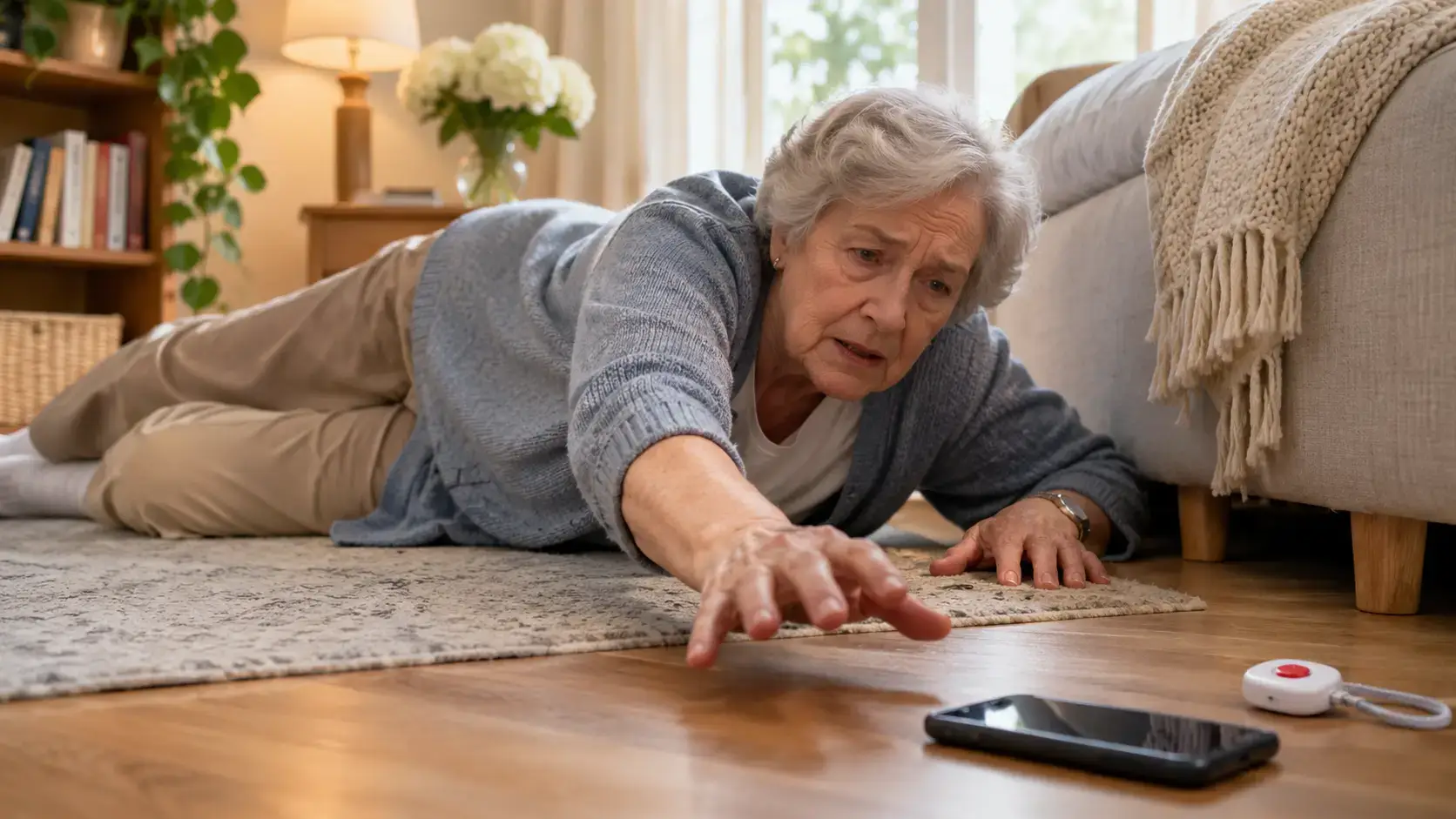

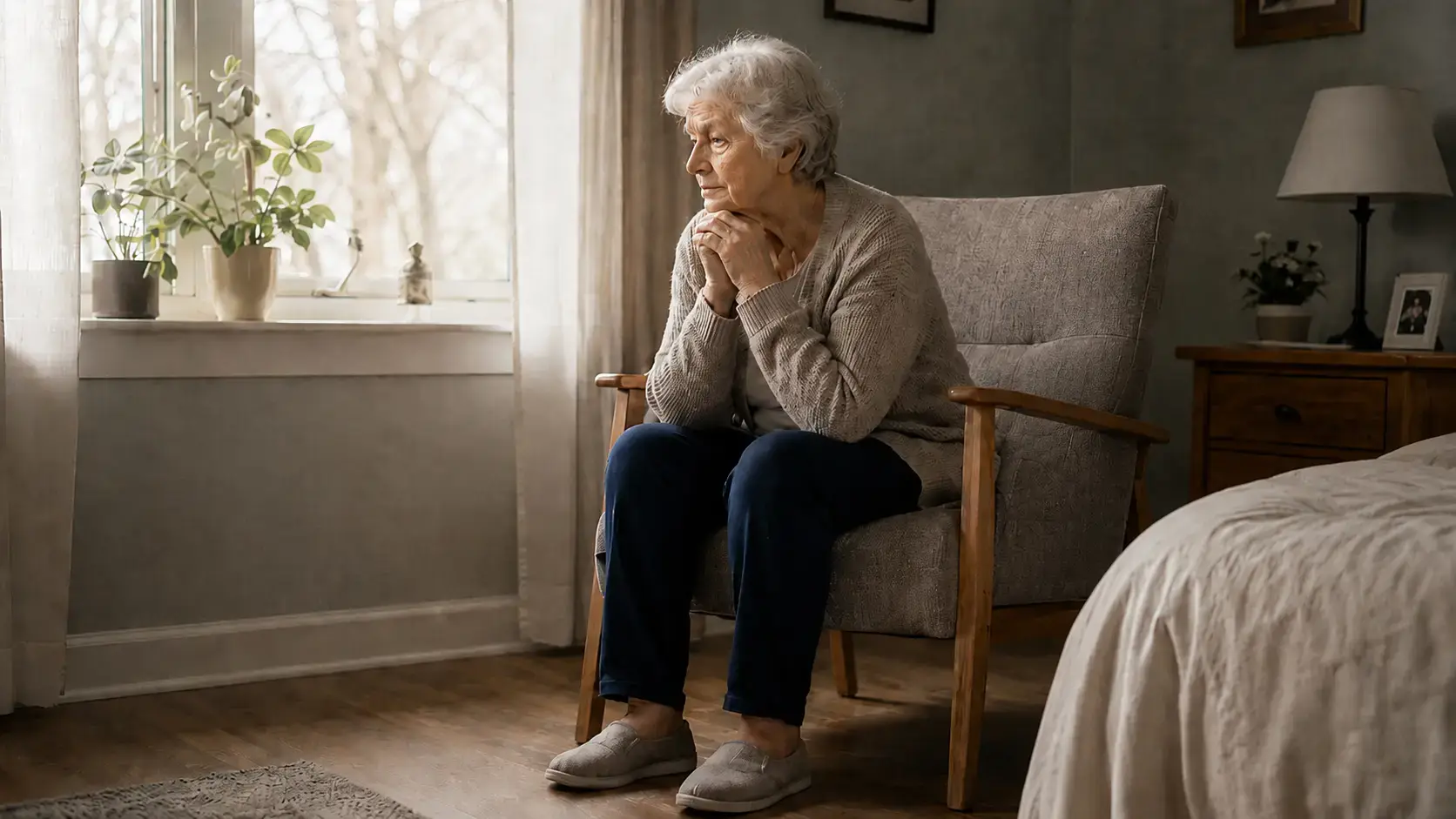
A fall may last only a few seconds, but its consequences can affect an older adult for weeks or months. Beyond physical injuries, fear, reduced activity, social withdrawal, and loss of confidence can create a cycle that makes recovery more difficult.
What is post-fall syndrome in older adults?
Post-fall syndrome in older adults describes the physical and psychological decline that may follow a fall, even when the initial injury appears limited.
The term is commonly associated with fear of falling again, reduced confidence while walking, changes in posture or movement, and voluntary restriction of everyday activities. Research shows that post-fall syndrome is recognized clinically but remains relatively understudied, while fear of falling is now often considered a broader issue that can occur even without a previous fall.
Key takeaways
Why can fear of falling become a problem?
Some caution after a fall is understandable. However, persistent fear may lead an older adult to avoid walking, shopping, visiting friends, or participating in normal activities.
The National Institute on Aging warns that fear of falling can reduce both physical and social activity. Remaining active is important because movement helps preserve strength, balance, and independence.

What other consequences can follow a fall?
The consequences are not limited to fractures or bruising. An older adult may begin avoiding stairs, standing without assistance, bathing alone, or leaving their room.
Supporting recovery after a fall
Recovery should consider both the cause of the fall and its wider consequences. Depending on the situation, support may include a medical review, medication assessment, physical therapy, strength and balance exercises, environmental changes, and gradual encouragement to resume safe activities.
Families and care teams should also watch for changes such as spending more time seated, walking less, avoiding usual routines, or withdrawing from social activities.
Discover RoomGuardian by NestSentinel
A fall should not be viewed as an isolated event. The time spent on the floor, the resident’s recovery, and subsequent changes in activity may all provide useful context.
RoomGuardian is designed to help detect falls, reduce the time before an alert, and identify unusual changes in movement or activity after an incident — without video cameras, wearables, or action required from residents. Its purpose is to give care teams more contextual information while preserving residents’ privacy.