
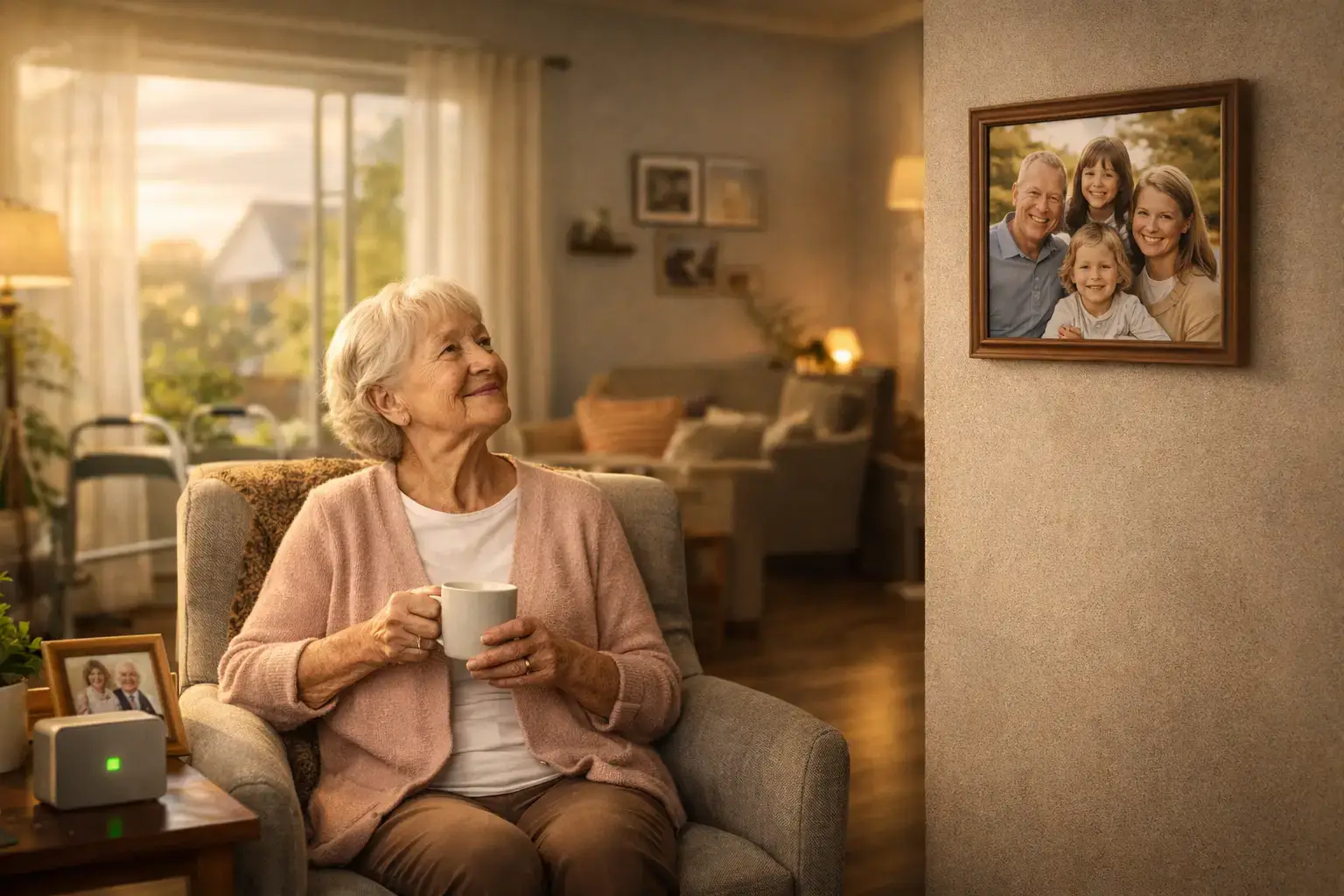
As populations age worldwide, more families are facing the same question: how to ensure safe and dignified living conditions at home. Aging in place is no longer just a personal preference — it has become a major societal issue linked to healthcare systems, autonomy, and risk prevention.
What is aging in place?
Aging in place refers to the ability of seniors or vulnerable individuals to live safely, independently, and comfortably in their own home as they grow older.
It involves maintaining autonomy while ensuring adequate home safety, access to care, and early detection of potential risks in daily life.
Key takeways
- Aging populations are increasing pressure on healthcare systems and care environments,
- Most seniors prefer staying at home rather than moving to institutions,
- Home environments often contain hidden risks that can lead to accidents,
- Prevention and safety technologies are essential to support independence,
- Early detection of incidents can significantly reduce hospitalizations.
Why this is becoming a major societal issue?
Demographic trends are transforming our societies. The number of people aged 65 and over is growing rapidly, while healthcare resources remain limited.
This creates a structural challenge:
- Fewer caregivers available,
- Increased demand for long-term care,
- Rising healthcare costs.
As a result, enabling seniors to safely remain at home becomes both a human and economic necessity.
Why home environments can be risky?
While staying at home promotes comfort and emotional well-being, it also exposes individuals to everyday risks that are often underestimated.
Common hazards include:
- Falls due to slippery floors or poor lighting,
- Undetected health incidents (fainting, immobility),
- Fire or gas-related risks,
- Delayed response in emergency situations.
For vulnerable individuals, these risks can quickly escalate without proper risk prevention strategies.
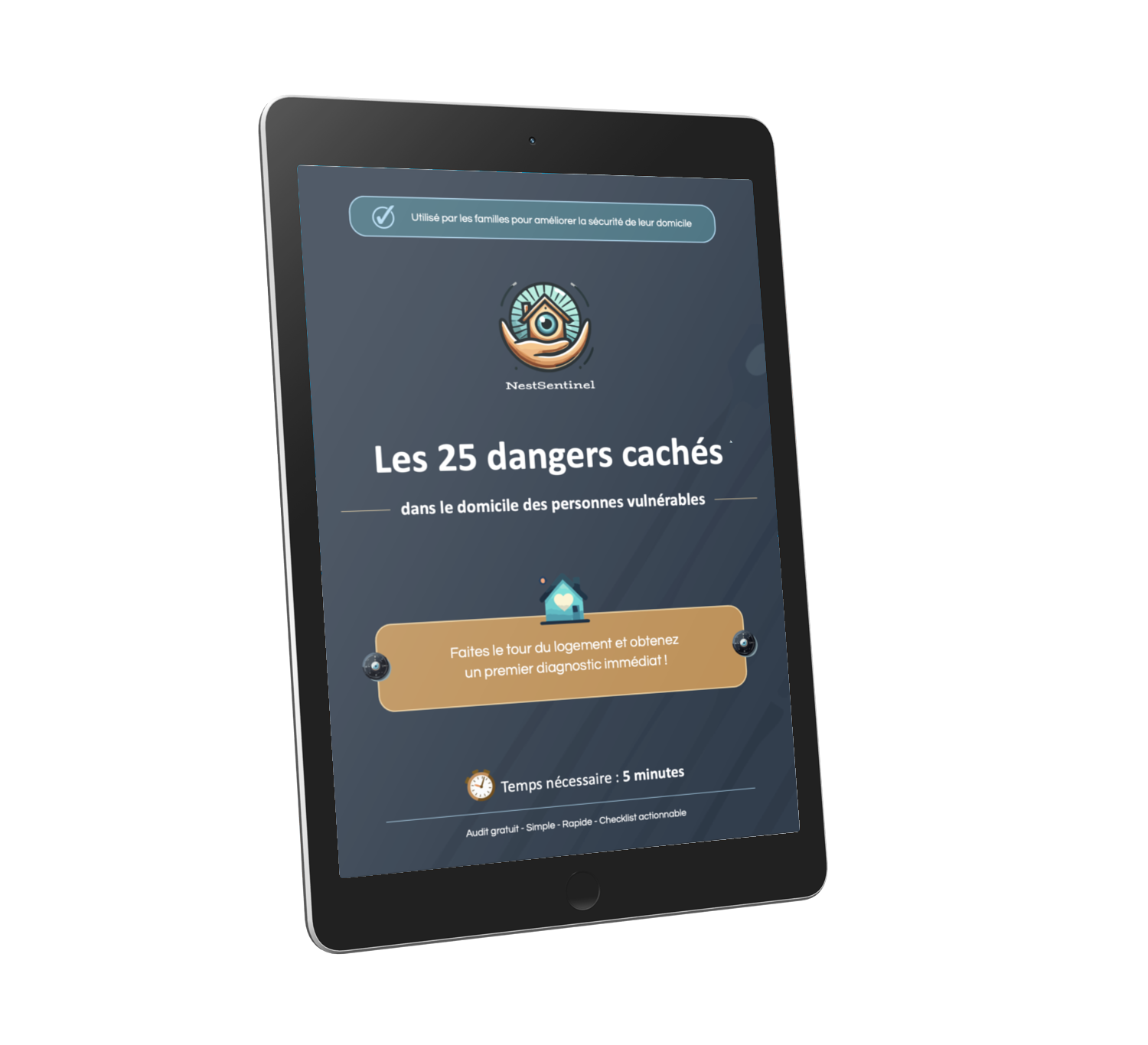
👉 Get my free checklist
Protect my loved one in under 5 minutes
Why vulnerable individuals are more exposed?

Seniors and fragile individuals face increased exposure due to several factors:
- Reduced mobility and balance,
- Chronic health conditions,
- Social isolation,
- Slower reaction times in emergencies.
These elements make early detection and continuous monitoring critical, especially in both home settings and care environments.
Prevention and safety measures
To address these challenges, a combination of human support and safety technologies is essential.
Key approaches include:
- Adapting the home (lighting, layout, anti-slip solutions),
- Regular check-ins from caregivers or family,
- Implementing smart monitoring systems,
- Using non-intrusive detection tools (fall detection, environmental monitoring).
The goal is simple: ensure safety without compromising dignity or independence.
Follow NestSentinel
Solutions designed to improve safety and risk prevention for seniors and vulnerable individuals are evolving rapidly.
But many risks at home remain invisible — until something happens.
Take the first step toward a safer, more secure environment — in just a few minutes.

Sources and references
- World Health Organization (WHO) – Carbon monoxide poisoning
- Centers for Disease Control and Prevention (CDC) – Carbon monoxide poisoning prevention
- Santé publique France – carbon monoxide poisoning surveillance reports
FAQ: about aging in place
Why do most seniors prefer staying at home?
Because it preserves their independence, routines, and emotional comfort.
Is aging in place always safe?
It can be, provided that risks are identified and preventive measures are implemented.
What are the main risks at home for seniors?
Falls, delayed emergency response, and environmental hazards.
How can technology help?
Through early detection, real-time alerts, and continuous monitoring without intrusion.