
Choosing a prevention solution for a care facility is not only a technical or operational decision. In hospitals, clinics, nursing homes and medical-social environments, data protection, privacy and cloud sovereignty are central to trust.
What is a GDPR-compliant prevention solution?
A GDPR-compliant prevention solution is a technology that helps identify risk situations earlier while respecting personal data protection rules.
In practice, this means asking more than “Does the system detect a risk?”. Care facilities should also ask what data is collected, where it is processed, where it is hosted, who can access it, how long it is retained and whether the provider can document its compliance approach.
Key takeaways
Why GDPR matters in care environments
Care facilities handle sensitive situations: falls, distress calls, immobility, room presence, alerts, staff responses and sometimes health-related context. Even when a system does not record video or audio, it may still process information linked to an identifiable person.
GDPR requires organizations to define a lawful basis, limit data collection, secure processing, inform individuals and respect their rights. For care facilities, this means providers should be able to explain their role clearly and document how data is protected throughout the system.
What cloud sovereignty means
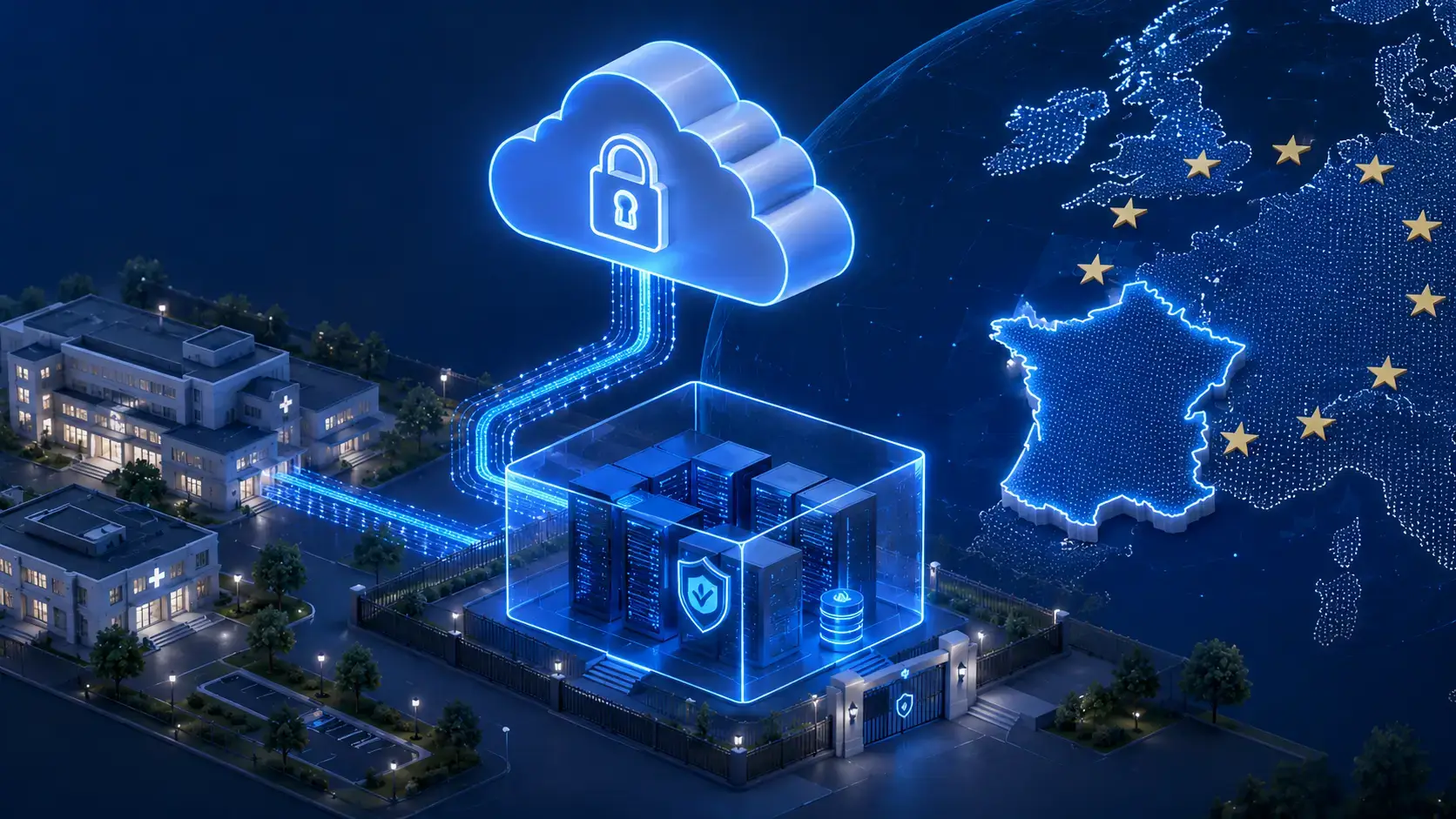
Cloud sovereignty is often reduced to “where are the servers?” That is only part of the issue.
For care facilities, sovereignty means maintaining control over sensitive data flows. It includes where data is stored, who can access it, which subcontractors are involved, whether data may be transferred outside the European Economic Area, and what legal framework applies.
A sovereign cloud approach should help reduce unnecessary exposure and make accountability easier to understand.
What care facilities should check
Why data minimization matters
A compliant prevention solution should not collect more data than necessary. This is especially important in resident rooms, patient rooms and other private spaces, where poorly designed monitoring can quickly feel intrusive.
Data minimization means collecting only what is useful, keeping it only as long as needed and avoiding unnecessary raw data transfers.
For example, a system does not always need identifiable video, raw audio or continuous cloud streaming to detect a risk situation. In many cases, contextual signals, local analysis and encrypted metadata can provide useful information while limiting exposure.
The role of local processing
Local processing can support both operational performance and data protection.
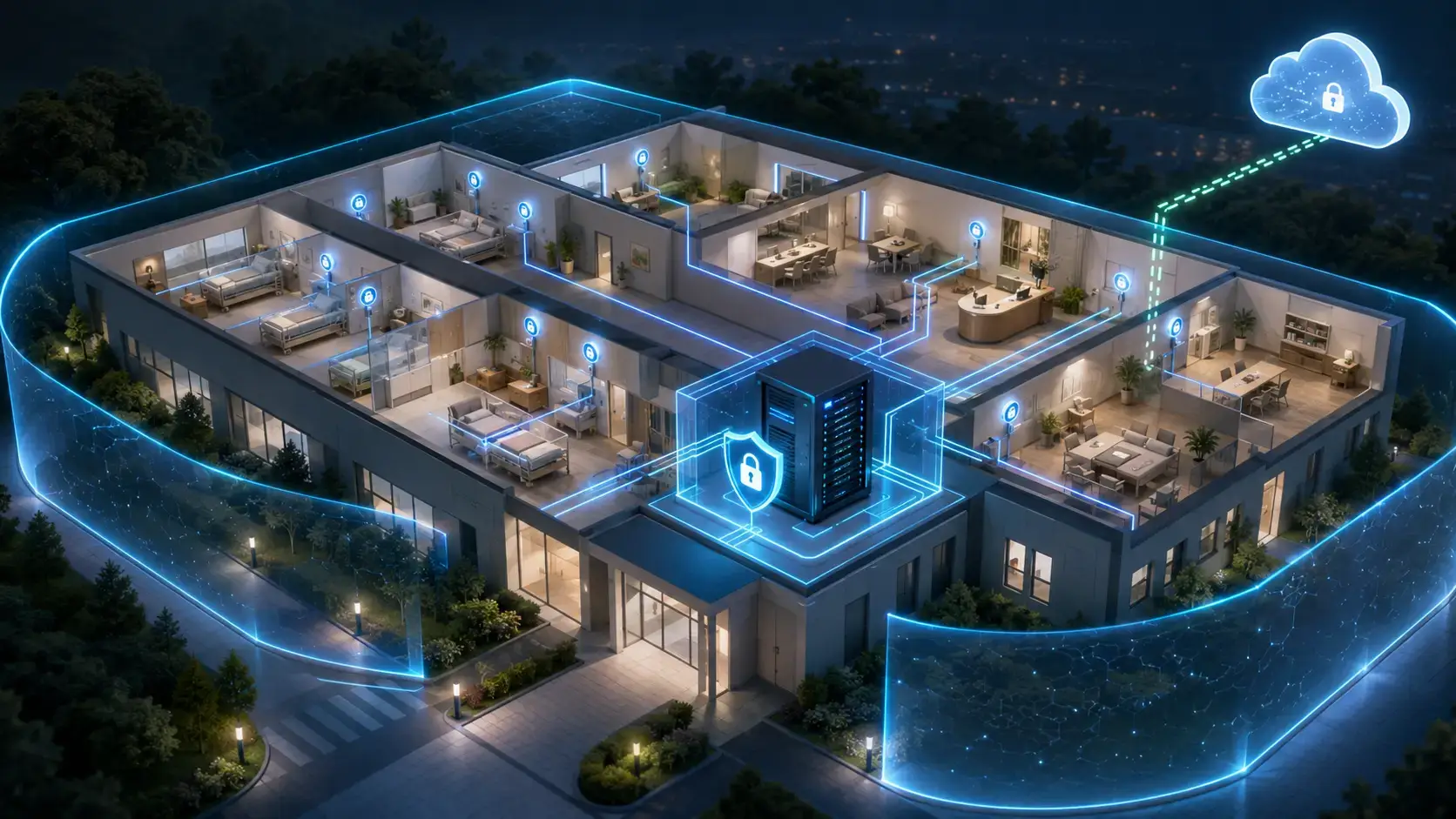
When analysis happens inside the facility, alerts can be generated faster, sensitive data can remain closer to its source and the cloud can be used mainly for supervision, dashboards, reporting and authorized access.
This does not remove the need for compliance. But it can help design a more privacy-conscious architecture from the start — this is exactly what we do with RoomGuardian and our NestSentinel platform.