
Not every emergency involves a fall, a loud impact or prolonged immobility. An older adult may remain conscious and call for help after sudden pain, weakness, disorientation or becoming unable to move independently.
What is distress call detection?
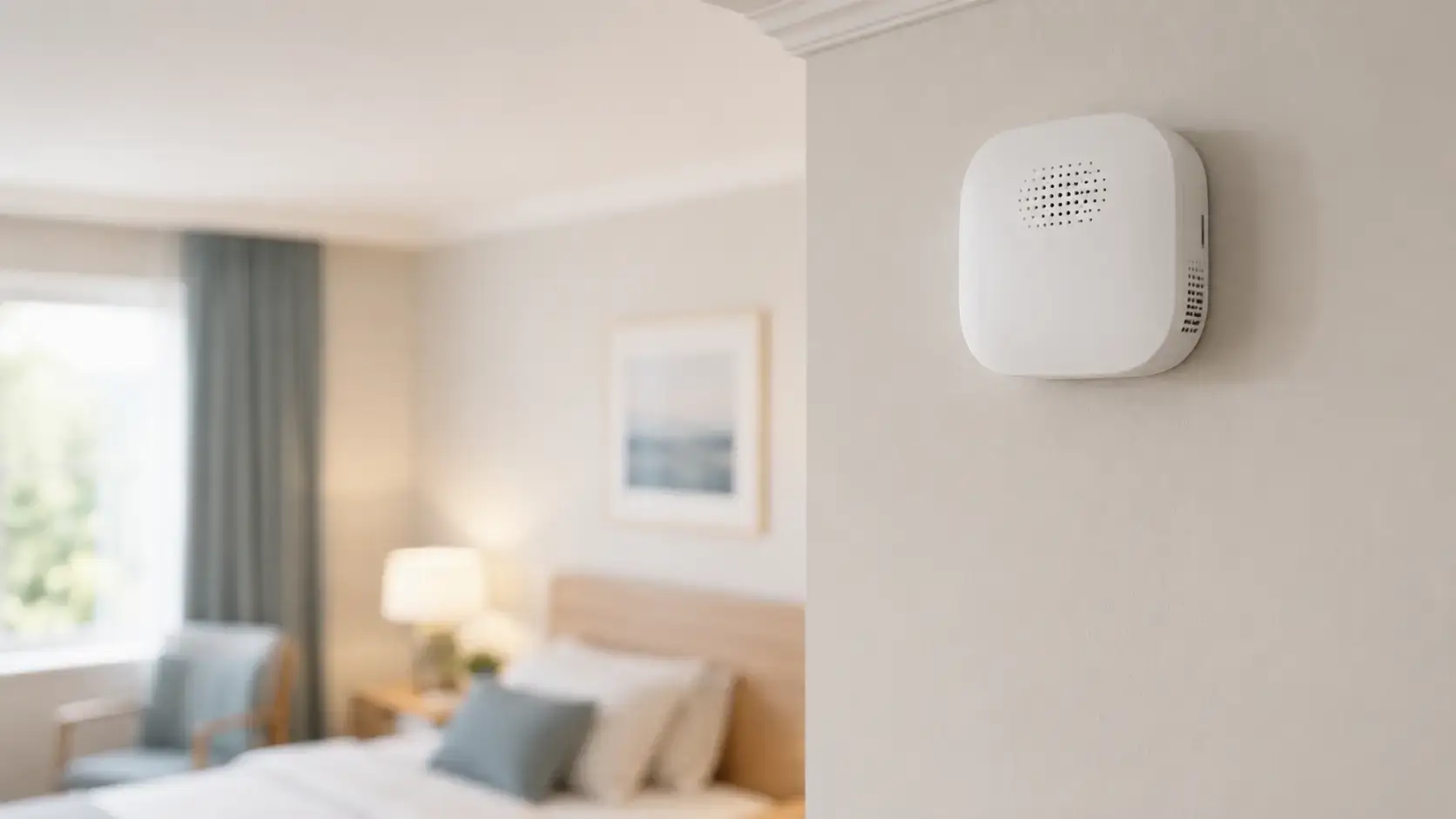
Distress call detection uses audio-analysis technology to recognize sounds or vocal expressions that may indicate a need for assistance.
Depending on the system, this may include a cry, repeated calling, a specific phrase or another unusual audio event. Research has explored automated sound classification as a complementary source of information for identifying distress situations involving older adults.
This is different from identifying a speaker, continuously transcribing conversations or allowing someone to listen remotely.
Key takeaways
When might an older adult call for help?
Falls remain a major threat to older adults, who experience the greatest number of fatal falls worldwide. However, prevention technologies should also consider events that do not match the typical pattern of a sudden fall.
How does it compare with conventional call systems?
Call buttons, pull cords and wearable pendants allow residents to request assistance intentionally. Their effectiveness, however, depends on the person being able to locate, reach and activate them.
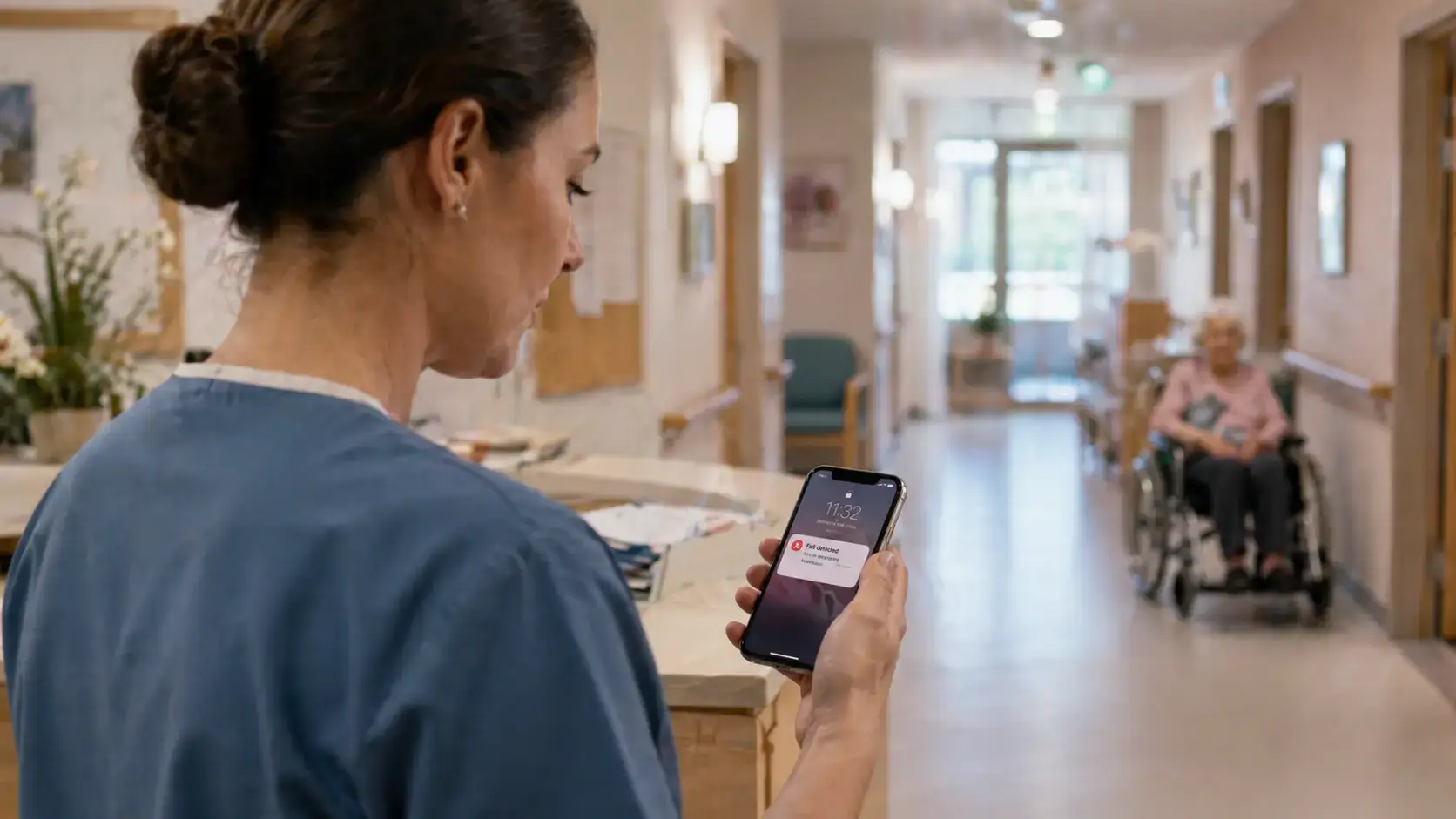
Voice-based distress detection can provide an additional route to alert staff when no button is pressed. Yet audio alone also has limitations. Television, visitors, ordinary conversation or words spoken during sleep may resemble distress signals.
A useful automatic distress alert for seniors should therefore avoid treating every loud sound as an emergency. Alert quality depends on how well the system accounts for the type of sound, repetition, location and surrounding situation.
Can audio monitoring preserve privacy?
Health-monitoring research consistently identifies privacy as a major consideration in the acceptance of ambient technologies. Systems should therefore minimize collected data, clearly explain their operation and restrict access to authorized users.
Why does context improve distress detection?
A voice-related alert becomes more meaningful when considered alongside other non-video information. For example, the system may assess whether someone is present, whether an unusual posture or lack of movement has also been detected, and whether the event occurred at an unexpected time.
This contextual approach can help care teams distinguish a possible emergency from an isolated sound. NHS England similarly emphasizes the value of identifying early signs of deterioration so that support can be provided before a situation becomes more serious. This is precisely the approach behind RoomGuardian, which combines audio-event analysis with complementary non-video signals to better qualify potential distress situations.