
Emergency call buttons can help older adults request assistance after a fall, sudden illness or other urgent situation. However, their effectiveness depends on the person being able to reach, wear and activate the device when help is needed.
What is an emergency call button for seniors?
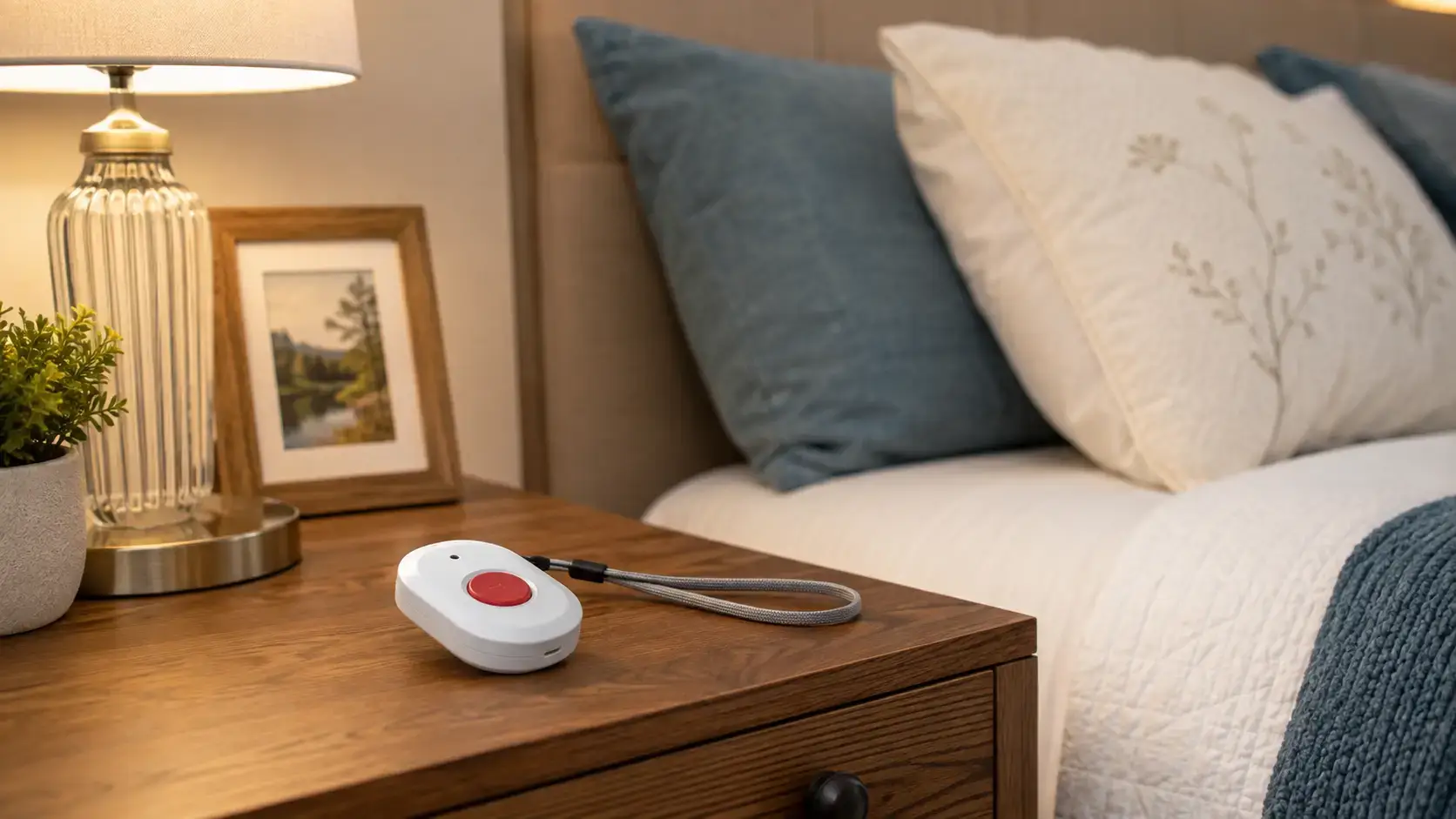
An emergency call button for seniors is a fixed or portable device that allows an older person to manually alert a caregiver, family member, care team or monitoring center.
Depending on the system, the button may be installed beside a bed, attached to a wall, integrated into a nursing home call system, or worn as a pendant or wristband. When activated, it can trigger an audible alarm, send a notification or open two-way communication with a response service.
The NHS describes personal alarms and telecare systems as technologies that can alert carers or call centers when someone experiences a problem such as a fall.
Key takeaways
What are the benefits of a senior emergency button?
The main advantage of a senior emergency button is its simplicity. When the person is conscious, able to move and close enough to the device, pressing it can provide a direct route to assistance.
Emergency buttons may also support independence by reassuring older adults who live alone. The US National Institute on Aging notes that medical alert systems, fall monitors and related services may help reduce risks for older people living at home.
In nursing homes and care facilities, a nursing home call button can also help residents communicate a need that is not necessarily a medical emergency, such as requiring help to stand, reach an object or use the bathroom.
What are the limitations of emergency call buttons?
Some wearable alarms include automatic fall detection, but this functionality is not universal and may be offered only as an additional feature.
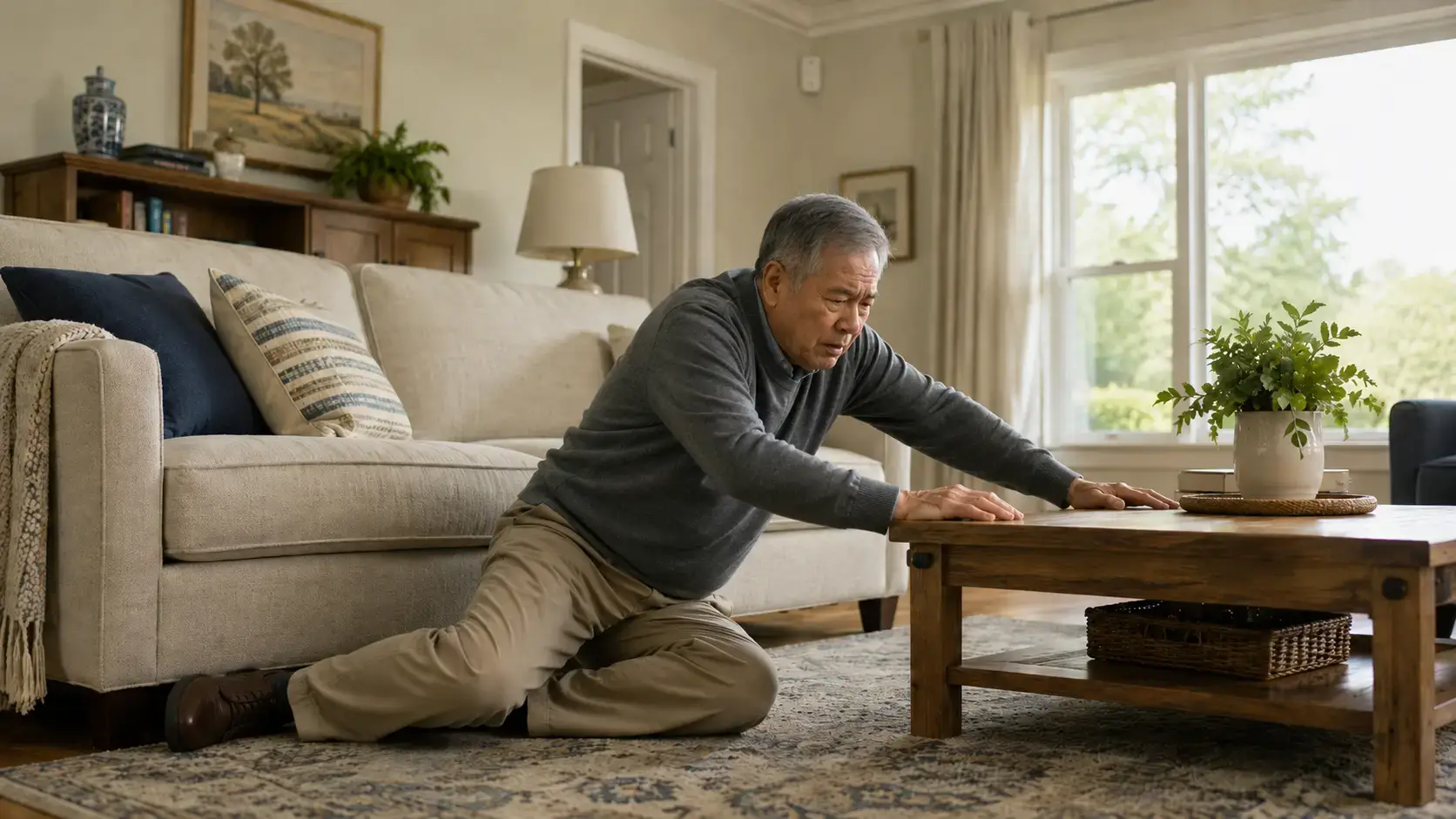
This matters because falls remain a major risk for older adults. The CDC reports that more than one in four people aged 65 and over falls each year in the United States.
Manual calling versus automatic detection
An emergency button answers the question:
“Can the resident ask for help?”
Automatic detection addresses a different question:
“Can the system identify that the resident may need help, even when they cannot ask?”
Fall detection without pressing a button may analyze changes in posture, movement, presence, impact sounds or prolonged immobility. Context is essential: a single sound or movement does not necessarily indicate an emergency.
The most relevant approach is therefore not always to replace emergency buttons, but to complement them with technologies capable of detecting situations in which manual activation is impossible.
Alternatives to emergency call buttons
Alternatives include wearable fall detectors, bed-exit sensors, radar systems, audio-event detection and camera-based monitoring. Each option has different implications for reliability, resident acceptance, privacy and false alerts.
RoomGuardian is designed to combine several non-video sensing modalities with locally processed AI. It aims to detect falls, distress calls, prolonged immobility and other emerging risk situations without requiring the resident to wear or press anything. It also includes two-way intercom functionality and a tactile button, preserving the option to communicate voluntarily when the resident is able to do so.
Discover RoomGuardian by NestSentinel
Emergency call buttons remain useful when residents can recognize a problem and request assistance. But some of the most critical situations occur precisely when they cannot.
RoomGuardian is designed to combine voluntary communication with automatic, contextual risk detection — without video cameras, wearables or action required from residents.