
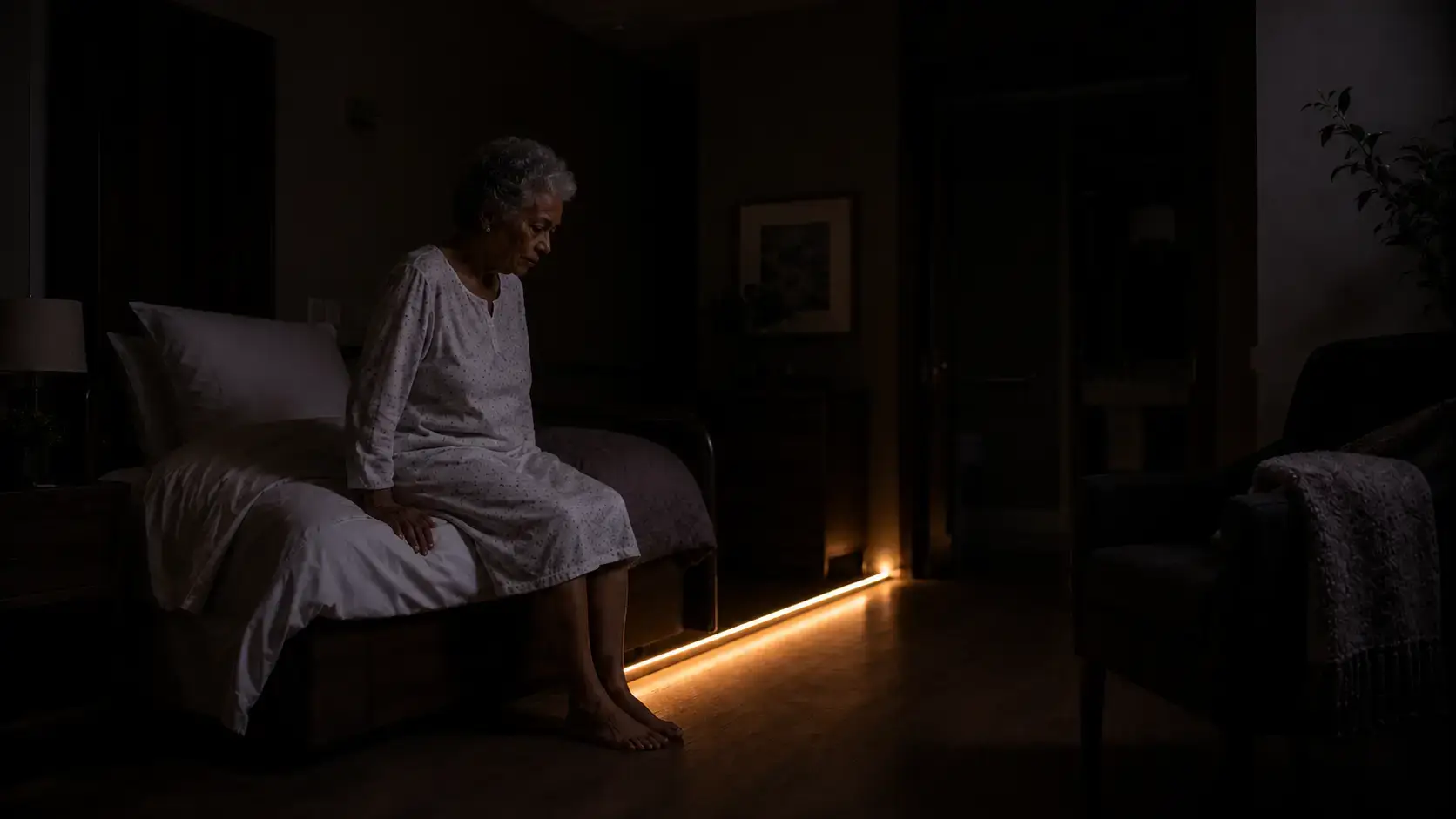
A resident leaving bed is not automatically in danger. The real challenge for care facilities is determining when a bed exit may signal disorientation, instability or an increased risk of falling.
What is bed exit detection?
Bed exit detection uses sensors or connected devices to recognise when a resident begins to leave—or has already left—their bed.
A conventional bed exit alarm may simply report a change in pressure. More advanced systems aim to interpret the surrounding context, such as the time of night, duration of absence, movement after standing or failure to return.
Key takeaways
Which bed exit detection technologies are available?
Pressure mats and bedside pads
Pressure-sensitive pads are placed on the mattress, chair or floor. An alarm is activated when pressure is removed or applied.
They are widely understood and relatively simple to deploy. However, movement in bed, incorrect positioning or a resident sitting on the edge may trigger non-actionable alerts. Research comparing pressure-based bed alarms has shown differences in accuracy and nuisance-alarm frequency depending on the sensor configuration.
Under-mattress bed sensors
These devices detect pressure, vibration or changes in bed occupancy without requiring the resident to wear anything. They are discreet and can indicate whether someone is in bed, but occupancy alone does not explain what happens after the person stands.
A resident may safely use the bathroom—or may become unstable immediately after leaving the bed.
Wearables
Bracelets and wearable sensors can analyse movement and sometimes identify transitions between lying, sitting and standing.
Their main limitation is practical: the resident must wear, charge and correctly position the device. Wearable fall technologies also face ongoing challenges involving adherence, comfort and real-world acceptance.
Radar-based detection
Radar can detect presence, movement and changes in position without capturing conventional video. Recent research has also assessed contactless mmWave radar for determining whether a patient is present in or absent from bed.
Radar can therefore extend detection beyond the mattress, although room layout, sensor placement and movement patterns remain important.
Thermal sensing
Low-resolution thermal sensing represents heat patterns rather than identifiable facial detail. It can help distinguish a person remaining in bed, standing nearby or moving at floor level without using an RGB video camera.
Its effectiveness still depends on coverage, positioning and environmental conditions.
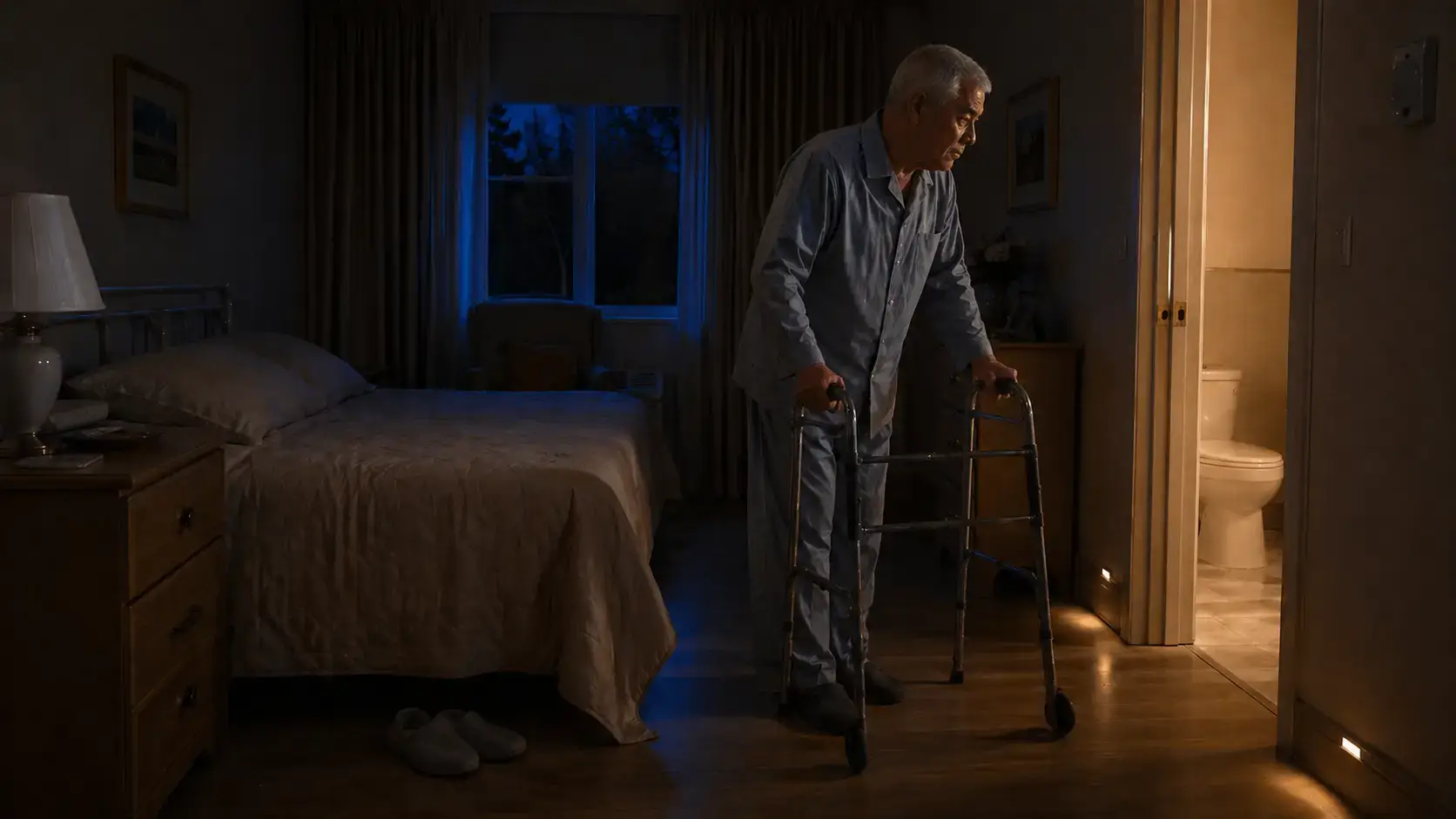
Why context matters more than the bed exit itself
Bed exit detection with RoomGuaridan
RoomGuardian by NestSentinel is designed to look beyond a single bed-exit trigger.
By combining complementary, non-video signals with local AI, it aims to help care teams identify potentially risky nighttime situations earlier—while features such as Safe Night and Light Assist are intended to support more contextual prevention, from unusual bed exits to safer movement toward the bathroom. No video cameras, no wearables and no action required from the resident.