
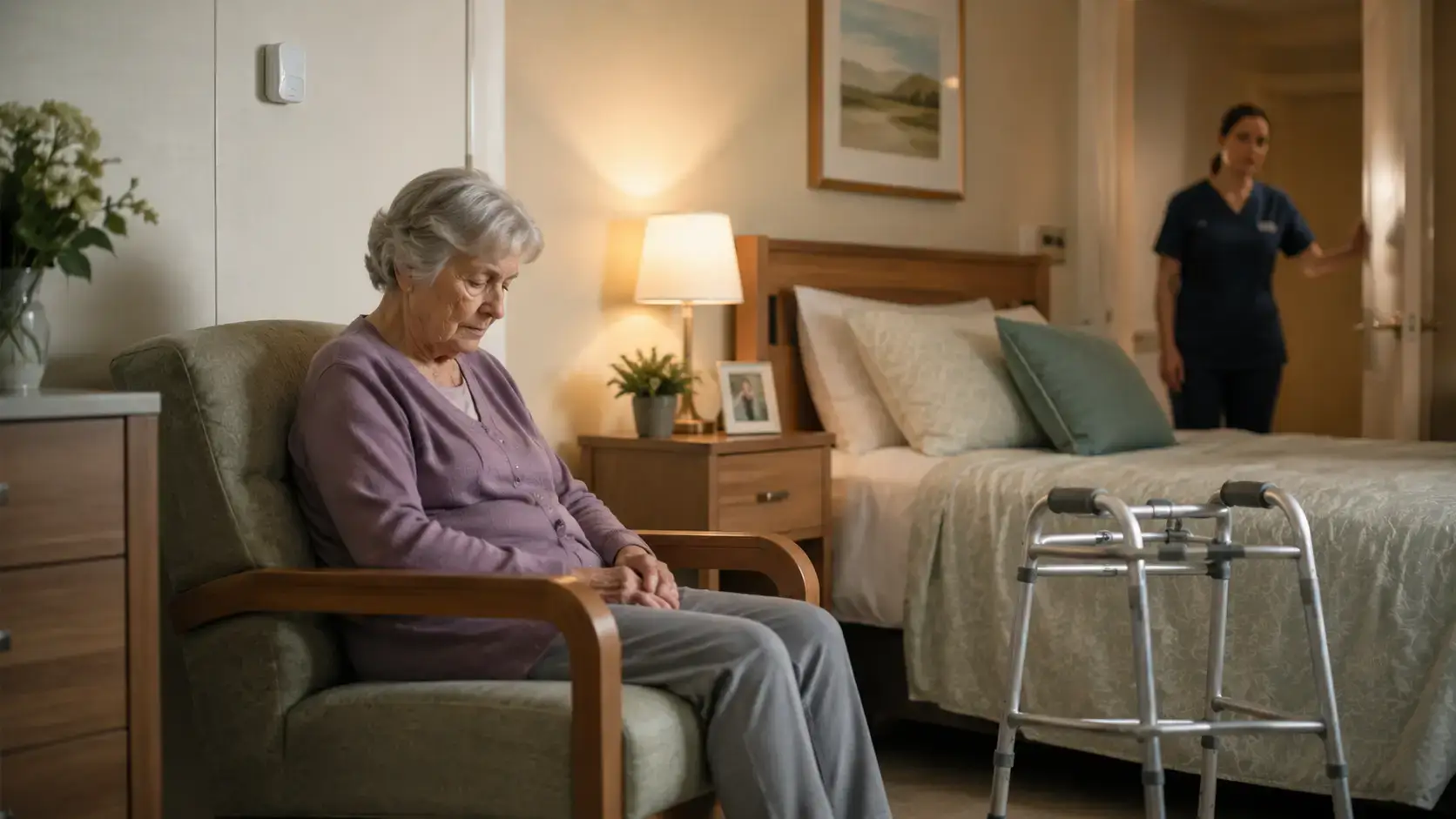
A lack of movement is not automatically an emergency. However, prolonged immobility detection in care facilities can help identify situations in which normal rest may have become a sign of a fall, distress or an unusual change in a resident’s condition.
👉 Get my free checklist
Protect my loved one in under 5 minutes
What is prolonged immobility detection?
Prolonged immobility detection is the use of sensors or monitoring technologies to identify when a person remains unusually still for longer than expected.
Immobility exists on a continuum, from reduced movement to being completely unable to move independently. Its significance therefore depends on the person, their location, posture, usual routine and the duration of inactivity.
Key takeaways
- Inactivity may represent sleep, rest, distress or an undetected fall.
- A fixed timer cannot determine whether every situation is dangerous.
- Posture, location, time and usual activity patterns provide essential context.
- Single motion sensors may confuse normal stillness with an emergency.
- Contextual analysis can support more relevant resident immobility alerts.
When can immobility become concerning?

A resident may remain still because they are sleeping, reading, watching television or resting in a chair. In other situations, the person may have:
- experienced a low-impact or unnoticed fall;
- become trapped between furniture;
- suffered sudden weakness or medical distress;
- been unable to stand from a chair or the floor;
- shown an unusual reduction in normal activity.
Prolonged inactivity can also contribute to physical deconditioning. NHS England notes that insufficient opportunities to mobilise may reduce muscle strength and mobility while increasing dependence and confusion among older adults.
Immobility is also a recognised risk factor for pressure injuries, especially when it is combined with frailty, altered mental status, pain or poor nutrition.
Why is a simple inactivity timer insufficient?
A basic elderly person not moving detection system may generate an alert after a predefined period without motion. This appears simple, but the same duration may have very different meanings.
Thirty minutes of stillness could be expected during sleep but unusual in a bathroom. Remaining seated may be normal after lunch but concerning if the resident usually moves regularly or has recently attempted to stand.
Rigid thresholds can therefore create two problems:
- unnecessary alerts during normal rest;
- delayed alerts when the situation is dangerous but the timer has not expired.
Overly sensitive systems can increase alarm fatigue, while thresholds that are too long may allow a genuine incident to remain unnoticed.
How can contextual detection improve alert quality?
Contextual inactivity monitoring for elderly residents evaluates more than the absence of motion. It may consider whether the person is in bed, seated or at floor level, whether the inactivity followed an unusual movement, the time of day and whether the pattern differs from their normal routine.
Complementary non-video technologies, such as radar and low-resolution thermal sensing, can provide information about presence, posture and movement while preserving privacy. The objective is not to diagnose a medical condition, but to help determine whether a situation may require verification.
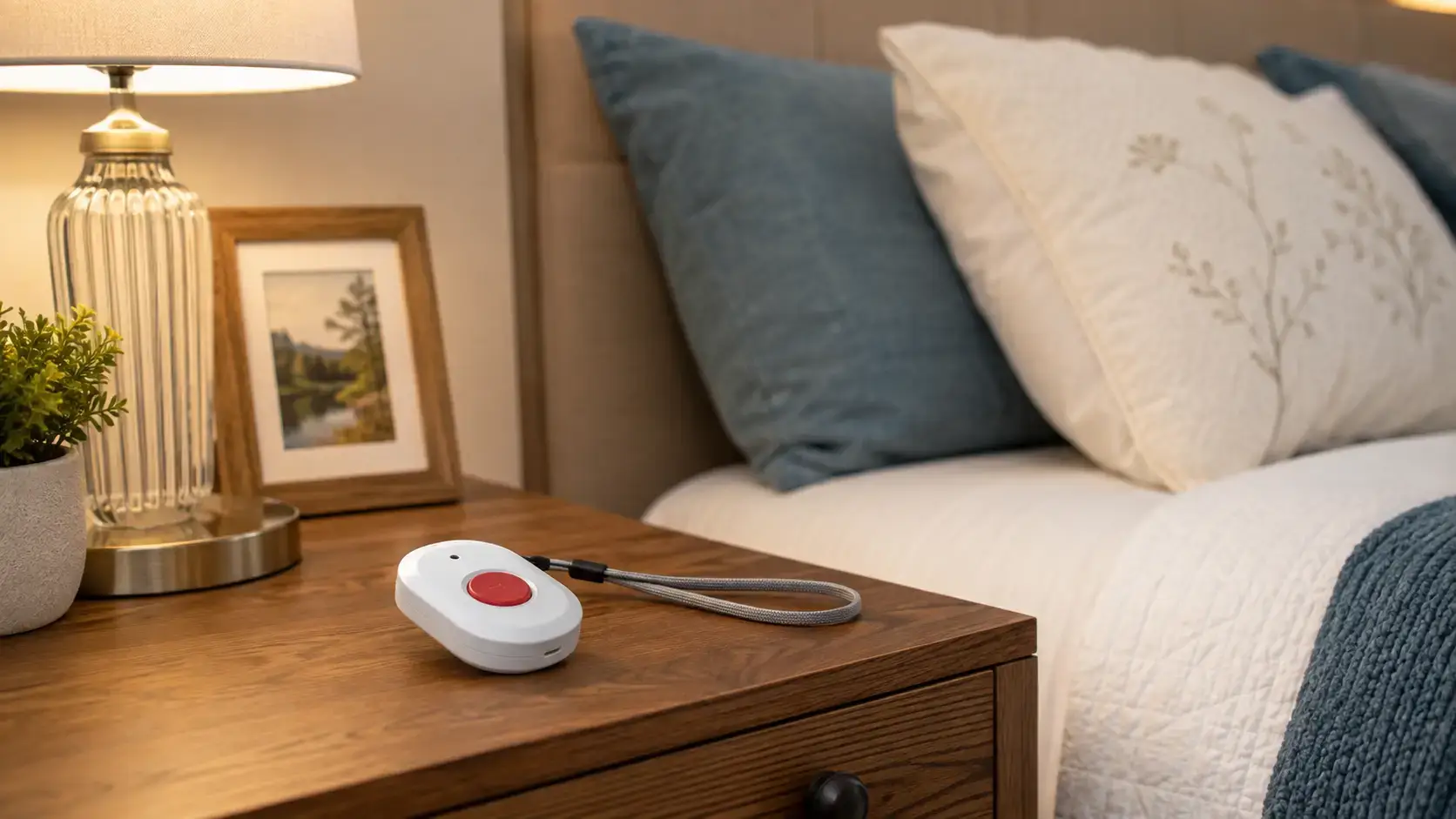
This approach supports RoomGuardian by NestSentinel, which is being designed to identify falls, prolonged immobility and other risk situations through contextual analysis—without video cameras, wearables or action required from residents.
Sources and references
- NHS England — Frailty and Immobility Resources.
- CDC — STEADI Inpatient Care and Older Adult Mobility.
FAQ: about prolonged immobility
How long before inactivity should trigger an alert?
There is no universal duration. The threshold should reflect the resident’s routine, location, posture and level of risk.
Can immobility indicate a fall without a strong impact?
Yes. A slow fall or gradual collapse may produce little movement or sound but leave the person unable to get up.
Can prolonged immobility be detected without video cameras?
Yes. Radar, thermal sensing, pressure sensors and other ambient technologies can monitor presence or movement without conventional video.
Does an immobility alert confirm a medical emergency?
No. It indicates that the situation may require verification and should complement—not replace—care protocols and professional judgement.