
Why understanding the care environment improves fall alert quality

Fall alerts are only useful when they are accurate, understandable and actionable. In care facilities, understanding the environment can help improve alert quality and reduce unnecessary interruptions.
Multi-sensor fall detection supporting safer care environments

Why understanding the care environment improves fall alert quality

A fall alert is only valuable if care teams can trust it. In hospitals, nursing homes and medical-social facilities, understanding the care environment can make the difference between a useful alert and unnecessary noise.

👉 Get my free checklist
Protect my loved one in under 5 minutes

What is context-aware fall detection?

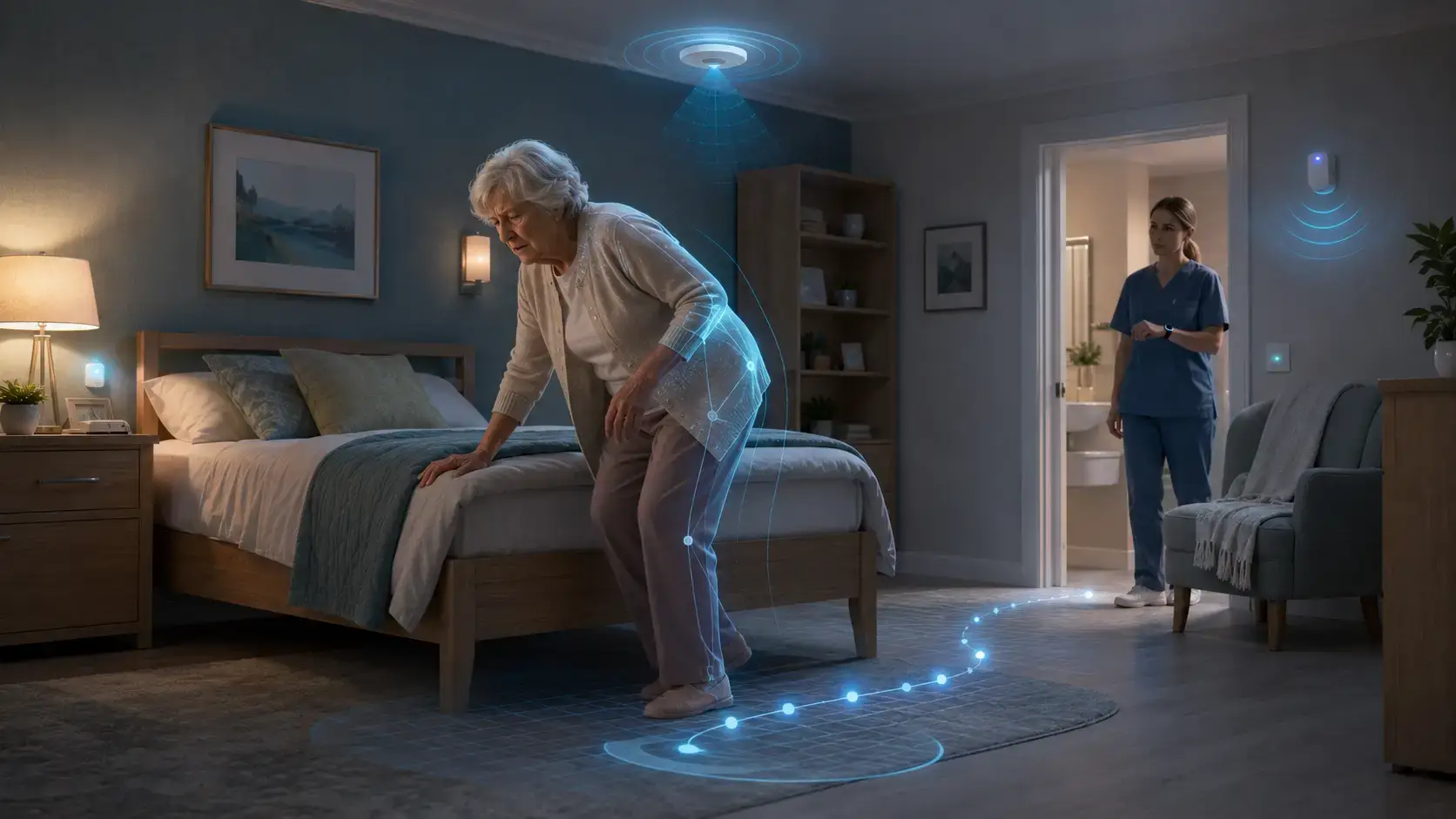
Context-aware fall detection is an approach that analyzes a possible fall in relation to its environment, not as an isolated signal.

Instead of asking only “Did something move?” or “Was there an impact?”, a context-aware system looks at several clues: presence, posture, movement, room activity, sound, time of day, immobility, and sometimes environmental conditions such as lighting or air quality.

Key takeaways

  • Fall alerts should be evaluated by quality, not only speed.
  • A single signal can be misleading without environmental context.
  • Too many false or unclear alerts can reduce staff trust.
  • Multi-sensor systems can help qualify alerts before notifying teams.

Why alert quality matters in care facilities

Falls are a major safety issue for older adults and vulnerable individuals. But in care environments, the challenge is not only detecting a fall. It is detecting the right event, at the right time, with enough confidence for staff to act.

If alerts are too frequent, vague or inaccurate, they can create alert fatigue. In healthcare, alarm fatigue is widely recognized as a patient safety concern because repeated exposure to non-actionable alarms can reduce responsiveness over time.

For care teams already managing multiple residents or patients, the best alert is not the loudest one. It is the one that is clear, targeted and clinically useful.
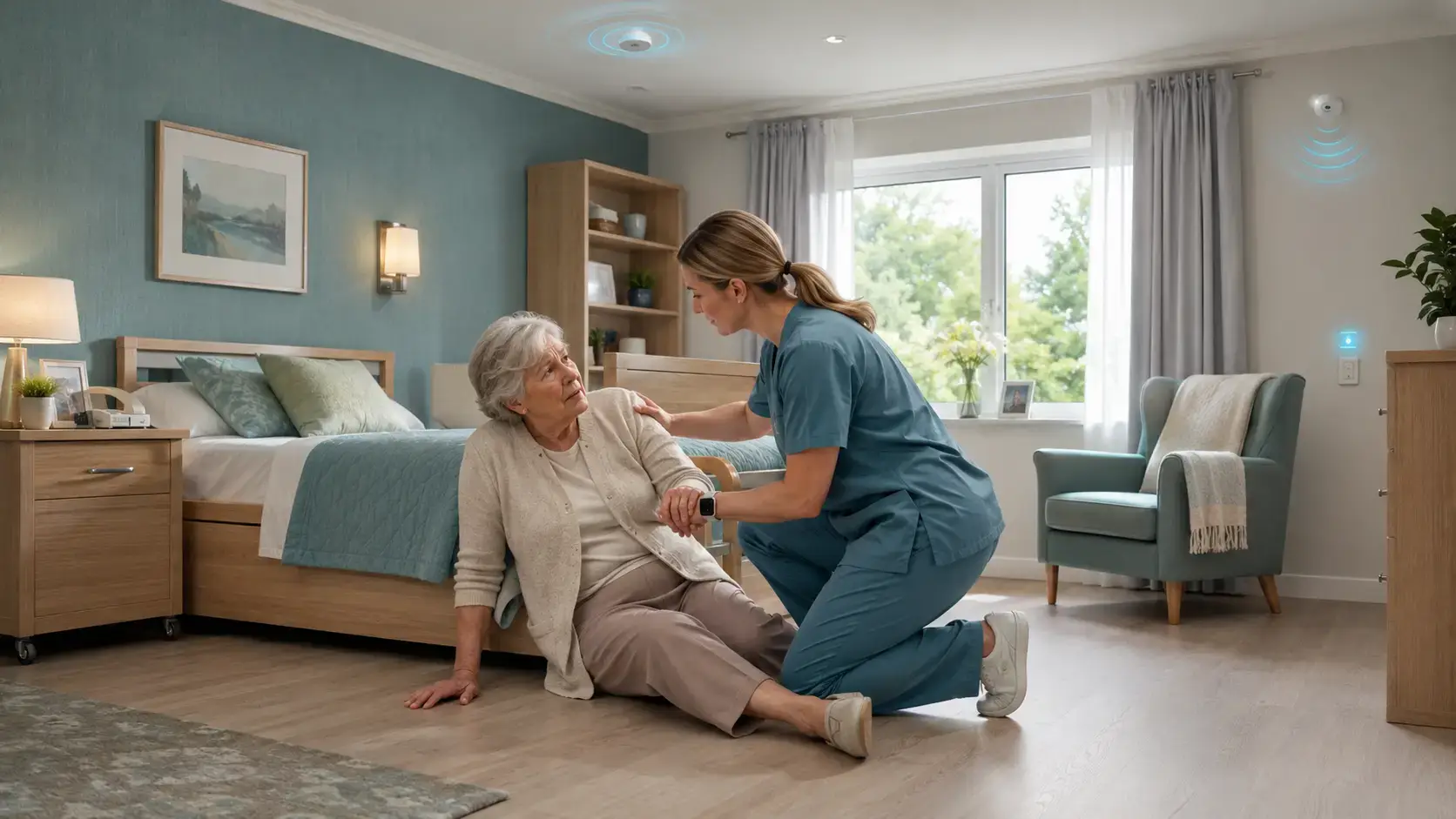
Caregiver assisting an elderly resident after a fall
AI-generated illustration.

Why single-sensor alerts can be limited

A single sensor may detect movement, sound, pressure or presence. But alone, it may miss context.

For example:

  • a loud sound may be a dropped object, not a fall;
  • immobility may be sleep, not distress;
  • movement near a bed may be a normal transfer;
  • a bed exit may be safe, or it may lead to a high-risk situation;
  • a posture change may require confirmation from other signals.


Without context, systems may either miss important events or generate alerts that staff quickly learn to distrust.

How environment improves fall alert quality

Understanding the environment helps a system interpret what is happening.

In a care room, the same signal can mean different things depending on context. A person lying down in bed is normal. A person lying on the floor after a sudden movement may require urgent attention. A night-time exit from bed may be ordinary, but if followed by immobility near the bathroom path, it may become a higher-risk situation.

Context-aware alerting can help answer practical questions:

  • Where did the event happen?
  • Was the person alone?
  • Was there a sudden posture change?
  • Did movement stop afterward?
  • Was there a distress sound?
  • Is this a repeated pattern?


Does the alert require immediate escalation?

Why multi-sensor detection can help

Multi-sensor fall detection combines several signals instead of relying on one source. Radar, thermal sensing, audio analysis, presence detection and environmental data can each provide part of the picture.

The goal is not to collect more data for its own sake. The goal is to qualify the situation more accurately, reduce unnecessary alerts and give staff information they can act on.

Sources and references

  • World Health Organization — Falls fact sheet.
  • CDC — Older adult fall prevention facts and data.
  • NCBI — Alarm fatigue and patient safety.
  • ANAP — Digital solutions for fall prevention and detection among older adults.

FAQ: about understanding the environment

A high-quality alert is timely, accurate, easy to understand and actionable for staff.

Yes. Context can help distinguish normal activity from situations that require intervention.

No. Radar, thermal sensing, audio analysis and other sensors can provide context without standard video monitoring.

If teams receive too many non-actionable alerts, they may lose confidence in the system and respond less effectively.

Share the Post:

Related Posts

NestSentinel Logo Claim - full white

🎁 Free checklist • Spot hidden risks in minutes

Help prevent fall risks before they happen...

🚀 Download your free checklist of the 25 hidden hazards and spot risks in just a few minutes.

Start making your loved one’s home safer — today:

*No spam, ever. Unsubscribe anytime with just one click.

NestSentinel Logo Claim - full white

🎁 Checklist gratuite • Repérez les risques rapidement

Prévenez les risques de chute avant qu’ils ne surviennent...

🚀 Téléchargez votre checklist gratuite des 25 dangers cachés et repérez les risques en quelques minutes.

Sécurisez leur logement dès aujourd’hui :

*Promis, pas de spam. Désabonnement en un clic à tout moment.

Leave a Reply

Your email address will not be published. Required fields are marked *