
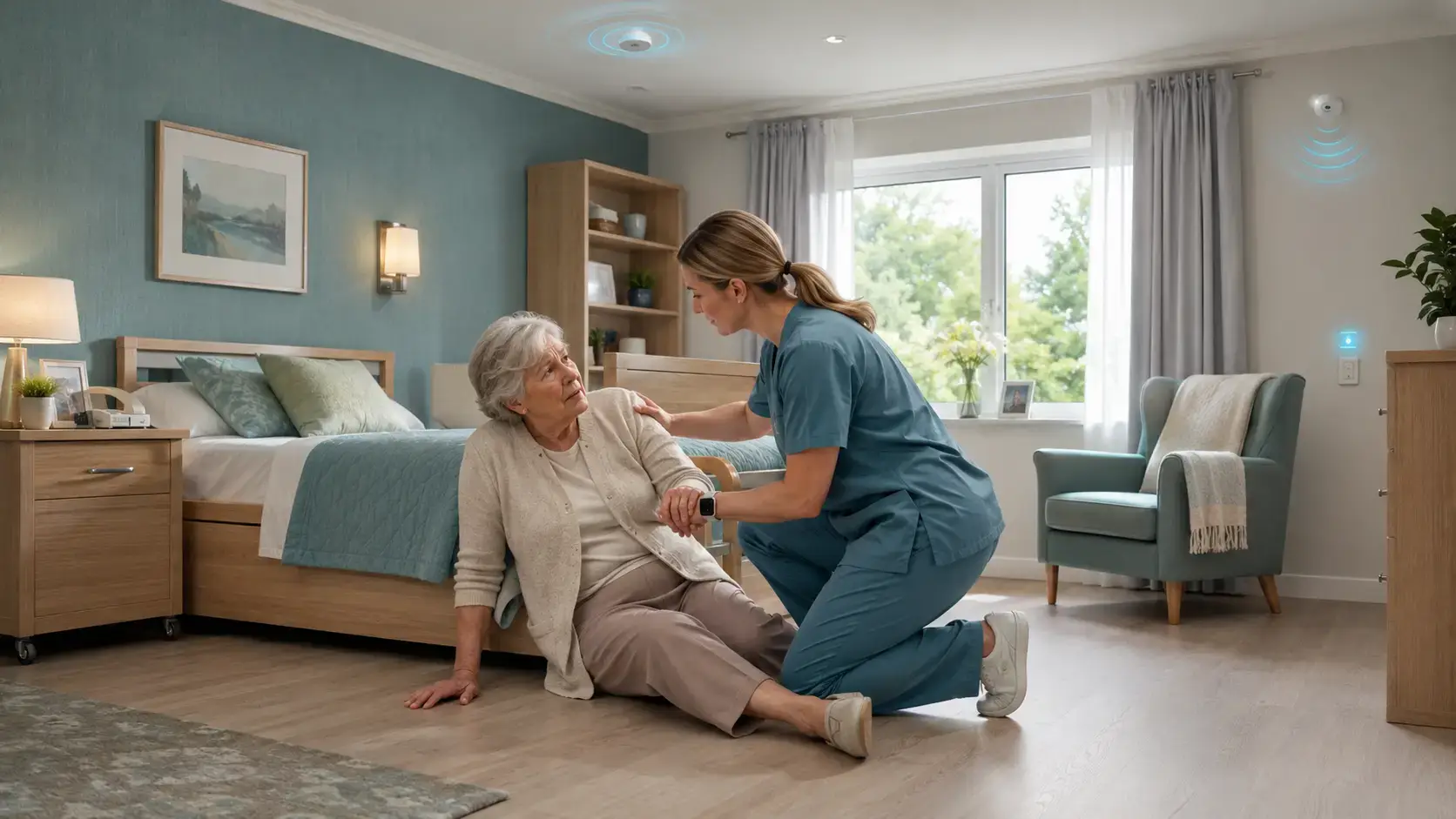
After a fall, the most critical issue is not always the fall itself. In nursing homes, hospitals and care facilities, the time a person remains on the floor before help arrives can strongly influence safety, recovery and follow-up.
What is time on floor after a fall?
Time on floor refers to the period between a fall and the moment someone is found, assessed and supported by staff.
This delay is especially important in unwitnessed falls. A resident or patient may fall between two rounds, be unable to reach a call button, feel confused, or remain silent due to pain, shock or cognitive impairment.
Key takeaways
Why time on floor matters
In care environments, many falls are not witnessed. This creates a critical blind spot: staff may only discover the incident during the next round, after another resident call, or when a family member or team member enters the room.
The longer a person remains on the floor, the harder it can be to assess what happened. Was there a loss of balance? A fainting episode? A night-time transfer? A failed attempt to reach the bathroom? Without timely detection and documentation, the response may become reactive rather than preventive.

Medical and care consequences
A delayed response after a fall can increase the risk of complications. These may include pain, dehydration, hypothermia, pressure injuries, fear of falling again, reduced mobility and loss of confidence.
For older adults and vulnerable patients, a fall can also trigger a broader decline: reduced independence, increased monitoring needs, emergency transfer or hospitalization.
This is why fall detection should not only be measured by whether it detects a fall. It should also be assessed by how quickly it helps staff act, understand and document the event.
Why unwitnessed falls are difficult for staff
Care teams already work under time pressure. Night shifts, reduced staffing, multiple rooms and competing priorities make continuous observation impossible.
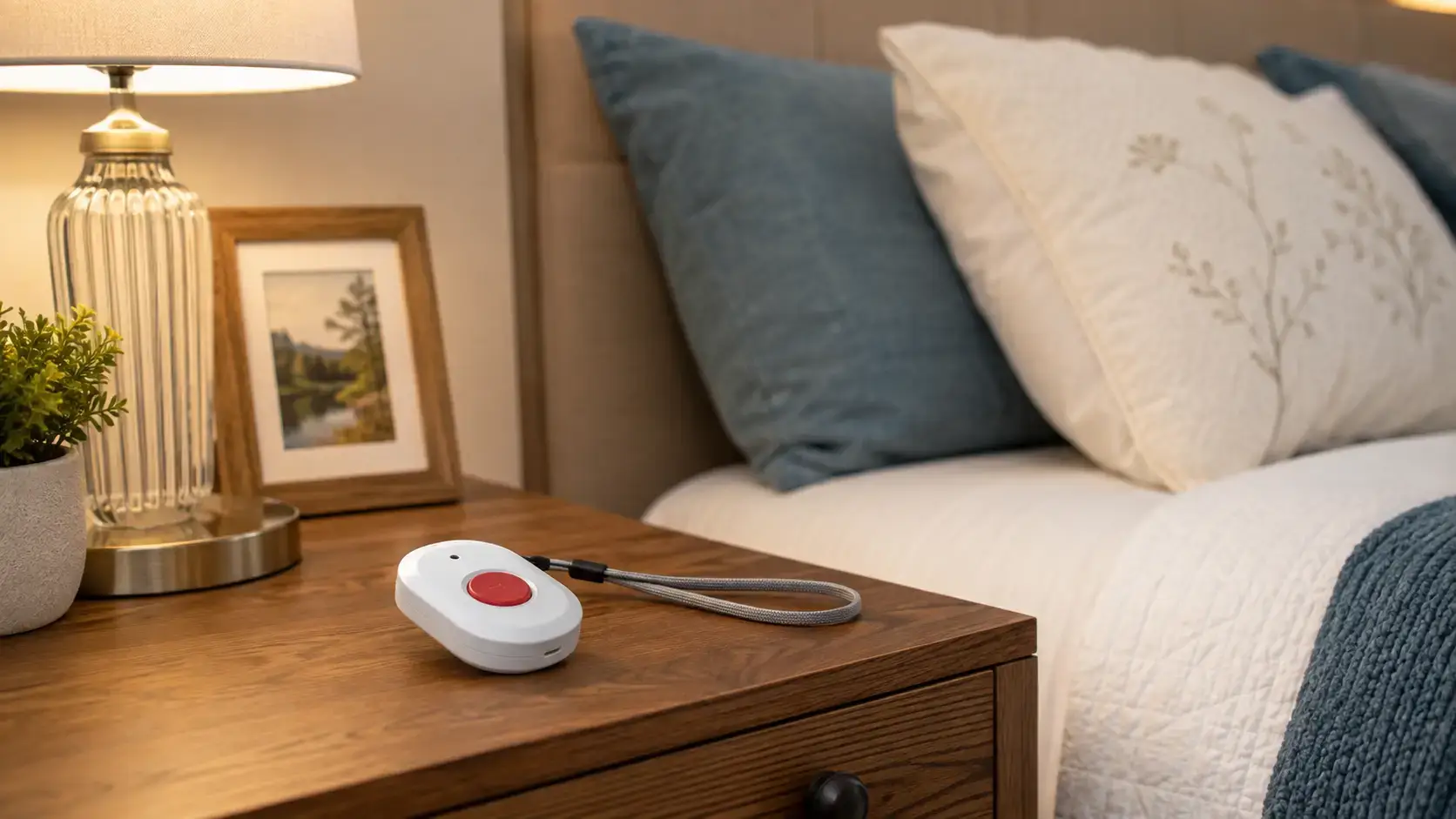
Traditional approaches such as rounds, call buttons or wearable alerts can help, but they all have limits. A person may not be able to press a button. A wearable may not be worn. A fall may occur outside a monitored zone.
A useful fall detection system should therefore reduce blind spots without creating constant false alarms.
What faster detection should enable
From detection to prevention
Reducing time on floor is not only about emergency response. It also supports quality improvement.
When facilities can better understand when and where falls happen, they can identify recurring patterns: night-time bathroom trips, poorly lit areas, mobility changes, medication effects or repeated room exits.
This turns fall detection into a broader risk prevention tool.