
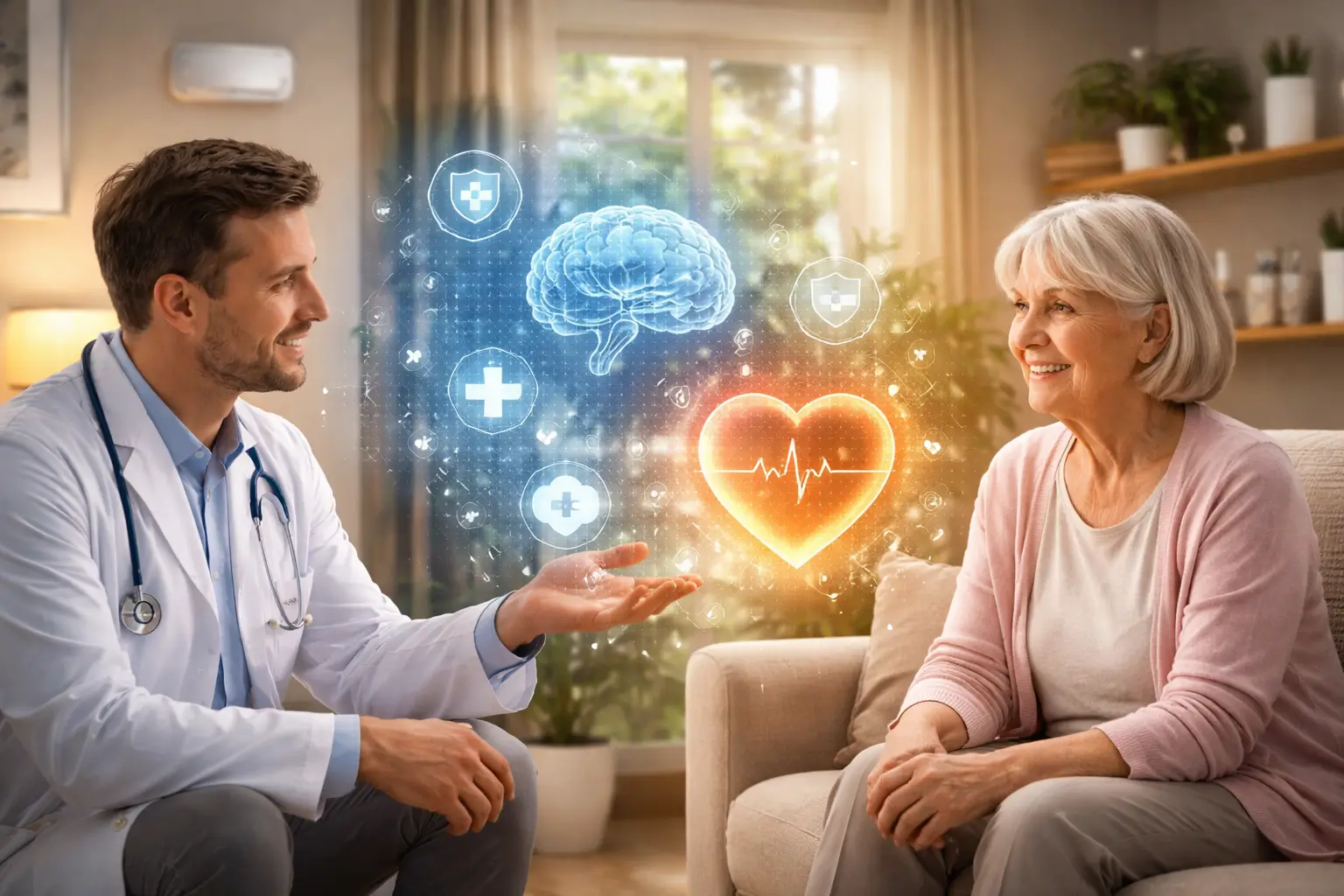
Artificial intelligence is transforming many industries — but its impact on healthcare is particularly significant. Between promises and real-world applications, AI is raising an important question: is it just hype, or a true revolution?
👉 Get my free checklist
Protect my loved one in under 5 minutes
What is artificial intelligence in healthcare?
Artificial intelligence in healthcare refers to the use of algorithms and data to analyze, predict, and support medical decisions.
It enables early detection of risks, improves diagnostics, and enhances risk prevention in both hospitals and home settings.
Key takeaways
- AI is already used in diagnostics, monitoring, and prevention,
- It helps improve home safety for seniors and vulnerable individuals,
- Early detection reduces complications and hospitalizations,
- AI supports healthcare professionals but does not replace them,
- Safety technologies are evolving rapidly thanks to AI.
Why this is more than a myth?
AI is no longer theoretical — it is already integrated into many healthcare systems.
Examples include:
- Medical imaging analysis (detecting anomalies faster),
- Predictive analytics for disease risks,
- Smart monitoring systems in homes and care environments.
These applications demonstrate that AI is actively improving both efficiency and patient safety.
Why vulnerable individuals benefit the most?
Seniors and vulnerable individuals are among the first to benefit from AI-driven solutions.
Because they are more exposed to everyday risks, AI can:
- Detect abnormal situations in real time,
- Alert caregivers quickly,
- Prevent serious incidents such as falls or prolonged immobility.
This makes AI a key tool for maintaining independence while ensuring safety.
Challenges and limitations
Despite its potential, AI also raises important challenges:
- Data privacy and security,
- Ethical concerns about decision-making,
- Need for human oversight,
- Risk of over-reliance on technology.
AI should be seen as a support tool — not a replacement for human care.
Prevention and future perspectives
The future of healthcare lies in prevention rather than reaction.
AI-driven safety technologies will increasingly:
- Monitor environments continuously,
- Identify risks before they occur,
- Improve quality of life at home.
This shift toward proactive care is what makes AI a true revolution.
Follow NestSentinel
Solutions designed to improve safety and risk prevention for seniors and vulnerable individuals are evolving rapidly.
But even before using AI-powered solutions, there’s already a lot you can do to make your home safer.
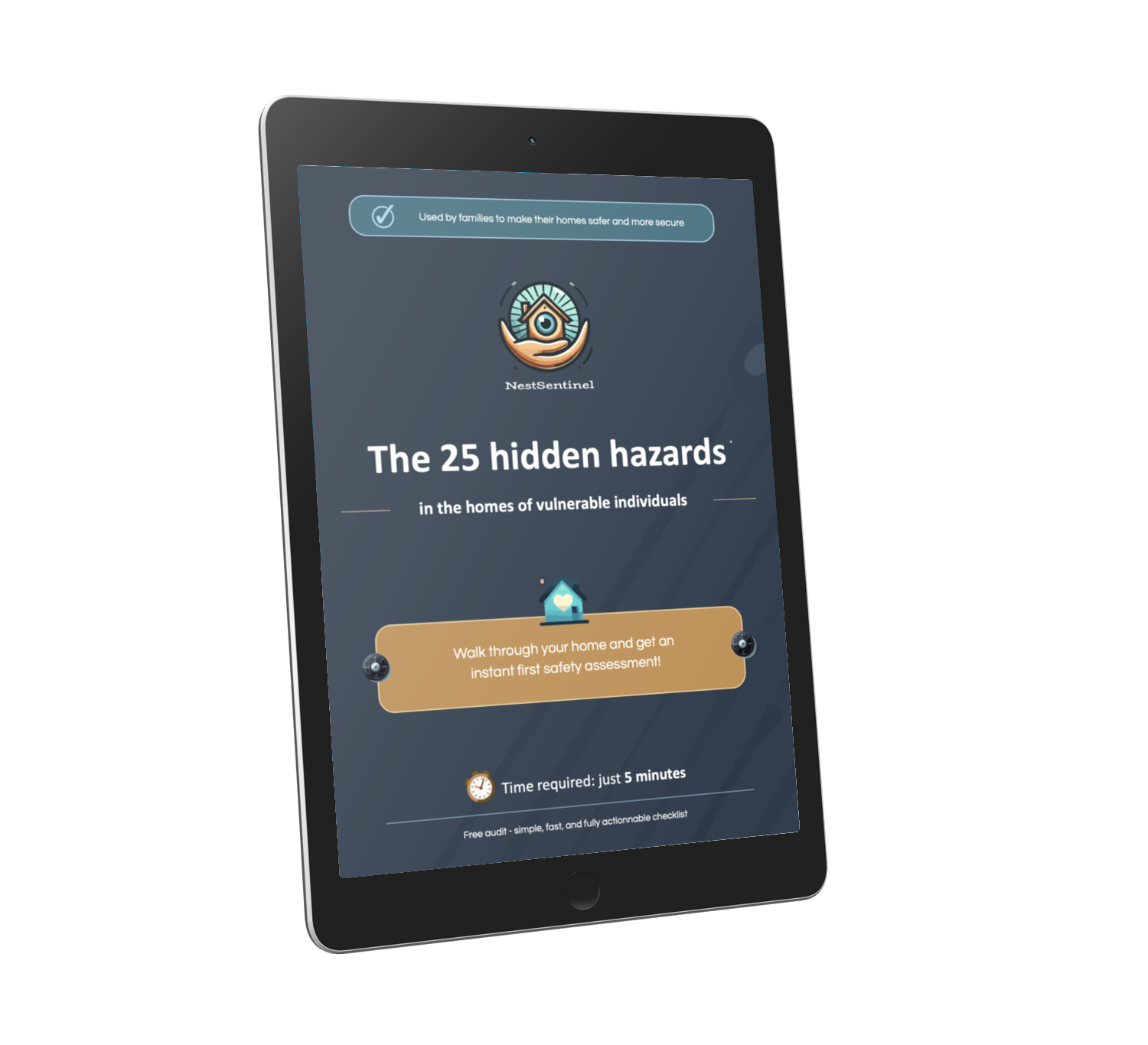
Download your free checklist of the 25 hidden hazards and quickly identify the risks in your loved one’s home.
Take the first step toward a safer, more secure environment — in just a few minutes.
FAQ: about AI in healthcare
Is AI replacing doctors?
No, it supports professionals by improving decision-making.
Can AI prevent accidents at home?
Yes, through early detection and continuous monitoring.
Is AI reliable in healthcare?
It is highly effective when combined with human oversight.
Who benefits the most from AI?
Seniors and vulnerable individuals, especially in home settings.


3 Responses