
Falls at home are the leading risk for Seniors!

When thinking about accidents affecting elderly people, we often imagine outdoor incidents or medical situations. Yet the reality is quite different: most senior falls occur at home.
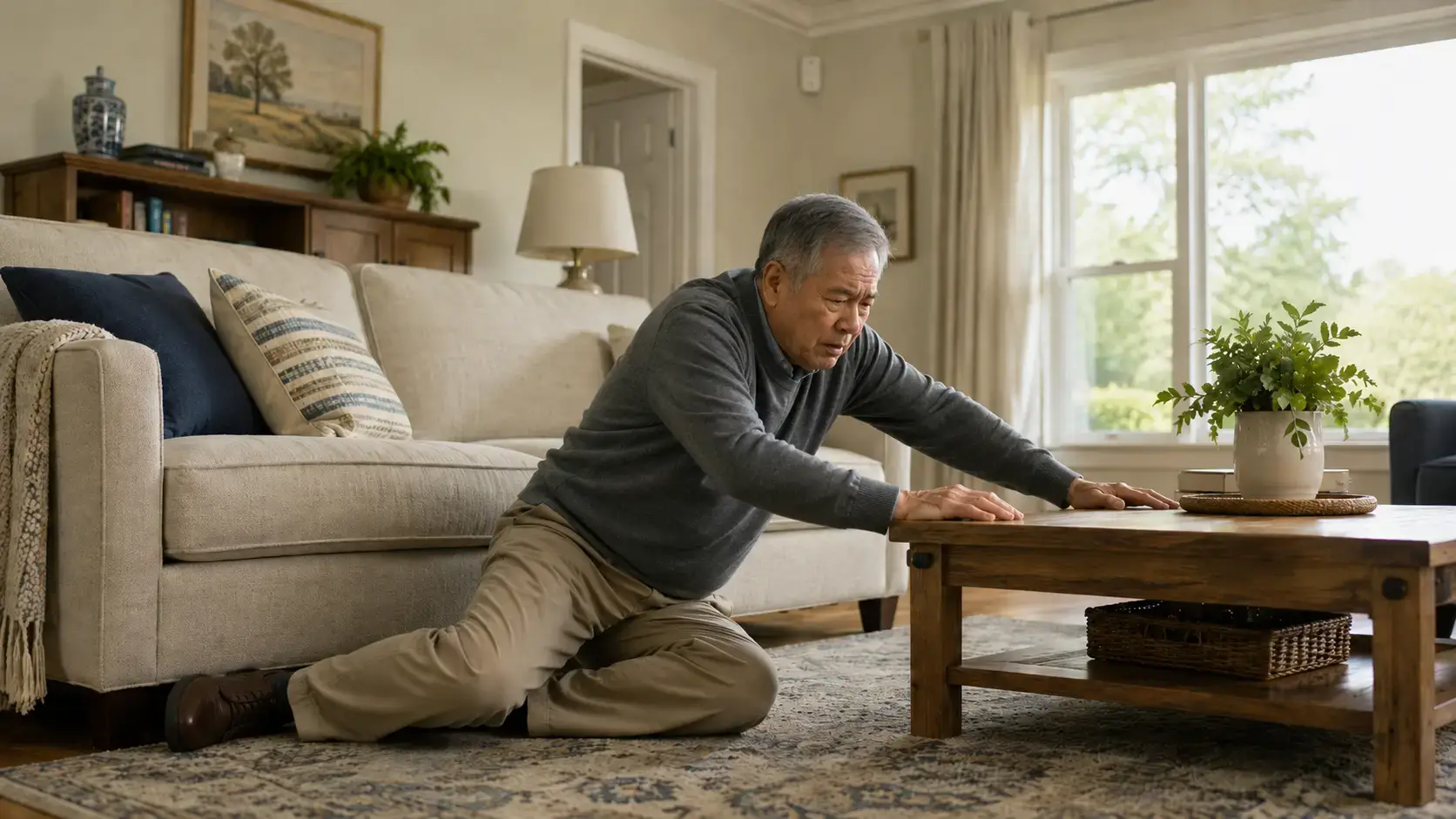
An elderly man falling at home

Falls at home are the leading risk for Seniors!

When thinking about accidents affecting elderly people, we often imagine outdoor incidents or medical situations. Yet the reality is quite different: most senior falls occur at home.

The home—symbol of safety and familiarity—gradually becomes a high-risk environment. Understanding why falls at home are now the leading danger for seniors helps us better anticipate and prevent accidents whose consequences can sometimes be irreversible.

👉 Get my free checklist
Protect my loved one in under 5 minutes

The home: a false sense of security

For many seniors, home represents:

  • Freedom,
  • Independence,
  • Comfort,
  • Familiar surroundings.

This sense of safety is often misleading. Long-established habits can conceal very real dangers—especially as the body changes with age.

The result: risks are underestimated, and preventive measures are implemented too late.

Good to know

  • A fall often leads to fear of falling again, which reduces mobility and accelerates dependency.
  • The majority of seniors wish to remain at home for as long as possible.
  • Prevention solutions must be discreet, simple, and non-intrusive to be accepted in the long term.
  • Anticipation is always better than reacting after an accident.

Why do most falls occur at home?

1. A living environment not adapted to aging

Homes were not designed for advanced age:

  • Slippery floors,
  • Poorly secured rugs,
  • Thresholds and steps,
  • Narrow staircases,
  • Lack of handrails or grab bars,
  • Insufficient lighting, especially at night.


With declining balance or vision, these elements become major fall risk factors for elderly people at home.

2. Nighttime falls

Many falls occur:

  • At night,
  • During rushed movements when getting up,
  • In partial darkness,
  • When fatigue or disorientation is present.


The combination of fatigue, low lighting, and balance issues makes nighttime a critical – and often invisible – danger for seniors at home.

3. Being alone at the time of the fall

Unlike specialized care facilities, seniors at home are often alone:

  • No immediate assistance,
  • Difficulty getting back up,
  • Inability to call for help,
  • Stress and panic.


The time spent on the floor after a fall is a major aggravating factor, sometimes more dangerous than the fall itself.

The consequences of a fall at home

A fall is never trivial. It can lead to:

  • Fractures (hip, wrist, spine),
  • Prolonged hospitalization,
  • Loss of mobility,
  • Fear of falling again,
  • Social isolation,
  • Premature admission to a care facility.


Very often, a single fall is enough to disrupt a senior’s entire life balance.

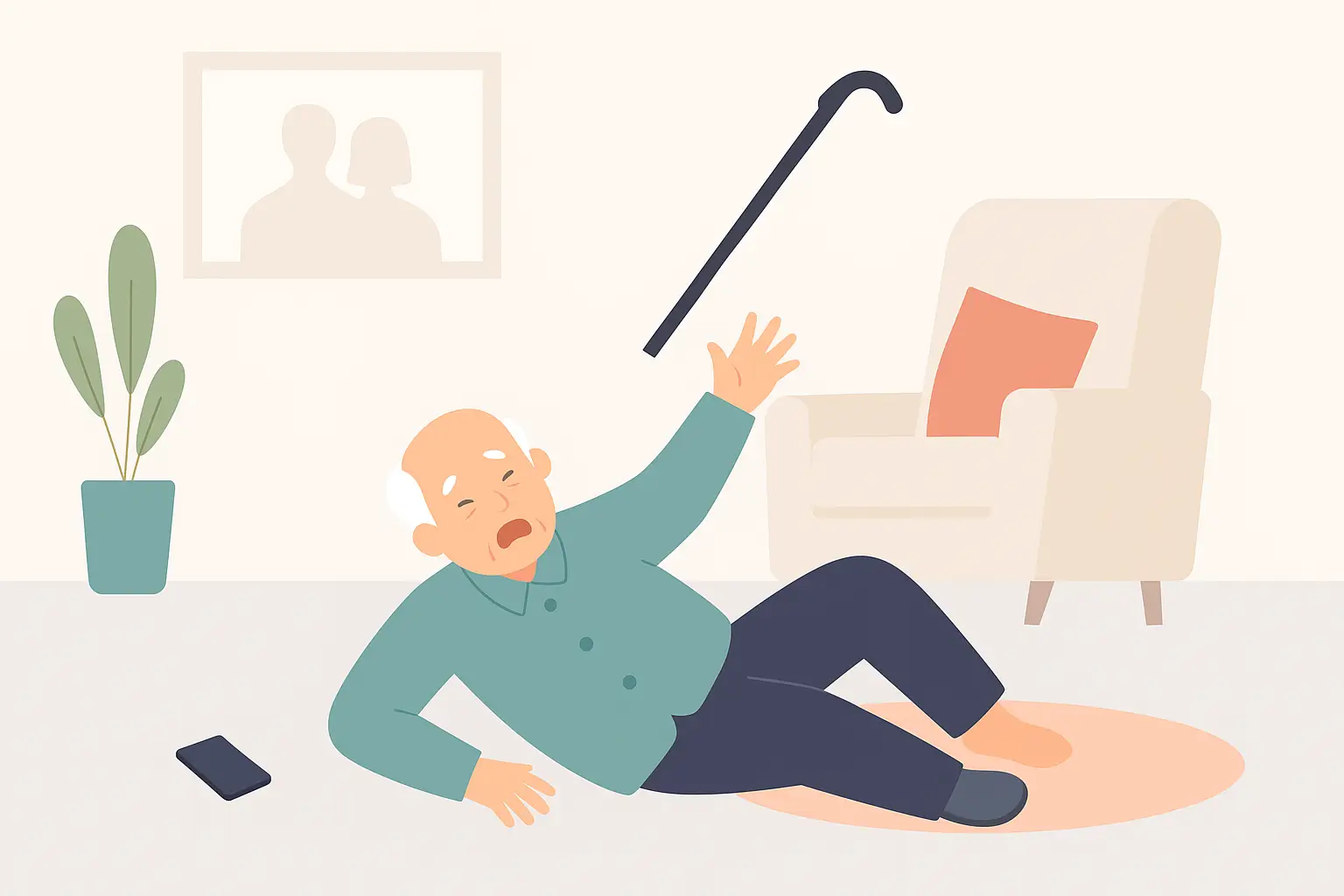
Older adult unable to get up after a slow fall
AI-generated illustration.

How can the risk of falls at home be reduced?

1. Gradually adapt the home

Some simple actions already help reduce danger:

  • Remove rugs,
  • Secure staircases,
  • Improve lighting,
  • Install grab bars,
  • Clear walking paths.


Home adaptation is essential
—but it does not cover every scenario.

2. Preserve mobility and balance

Maintaining adapted physical activity helps to:

  • Strengthen muscles,
  • Improve stability,
  • Significantly reduce the risk of falls.


Even light, regular exercises can have a positive impact.

3. Anticipate rather than react

Modern prevention aims to:

  • Detect risky situations early,
  • Reduce response time,
  • Protect seniors without constraining them,
  • Respect privacy.


New approaches combine prevention, technology, and discretion to support aging at home without stigmatization.

Why this issue concerns us all

Falls at home are not just an individual problem:

  • They affect family caregivers,
  • They place pressure on healthcare systems,
  • They impact society as a whole.


With an aging population, preventing falls at home becomes a collective responsibility.

Follow NestSentinel

The home should remain a place of safety and independence for seniors. Understanding why falls are so frequent at home is the first step toward better prevention.

If these challenges matter to you, follow the evolution of our thinking and work by subscribing to our newsletter dedicated to senior safety and aging at home.

FAQ: Falls at home among seniors

Because homes are not adapted to aging, and seniors feel safe there—leading to reduced vigilance.

Yes. Low lighting, fatigue, and disorientation significantly increase the risk of nighttime falls.

Not necessarily. Even a new home can present risks if it is not designed for reduced mobility.

It is essential to:

  • Consult a healthcare professional,
  • Analyze the causes,
  • Adapt the environment,
    Implement preventive measures.

Not entirely, but a global approach can greatly reduce risks – and, above all, the consequences.

Share the Post:

Related Posts

NestSentinel Logo Claim - full white

🎁 Free checklist • Spot hidden risks in minutes

Help prevent fall risks before they happen...

🚀 Download your free checklist of the 25 hidden hazards and spot risks in just a few minutes.

Start making your loved one’s home safer — today:

*No spam, ever. Unsubscribe anytime with just one click.

NestSentinel Logo Claim - full white

🎁 Checklist gratuite • Repérez les risques rapidement

Prévenez les risques de chute avant qu’ils ne surviennent...

🚀 Téléchargez votre checklist gratuite des 25 dangers cachés et repérez les risques en quelques minutes.

Sécurisez leur logement dès aujourd’hui :

*Promis, pas de spam. Désabonnement en un clic à tout moment.

3 Responses

Leave a Reply

Your email address will not be published. Required fields are marked *