
Falls remain one of the most serious risks for seniors and vulnerable individuals, both at home and in care environments. Thanks to artificial intelligence, fall detection can become faster, more reliable, and better adapted to real-life situations.
What is AI fall detection?
AI fall detection refers to the use of algorithms capable of analyzing signals to automatically identify a fall or an abnormal situation.
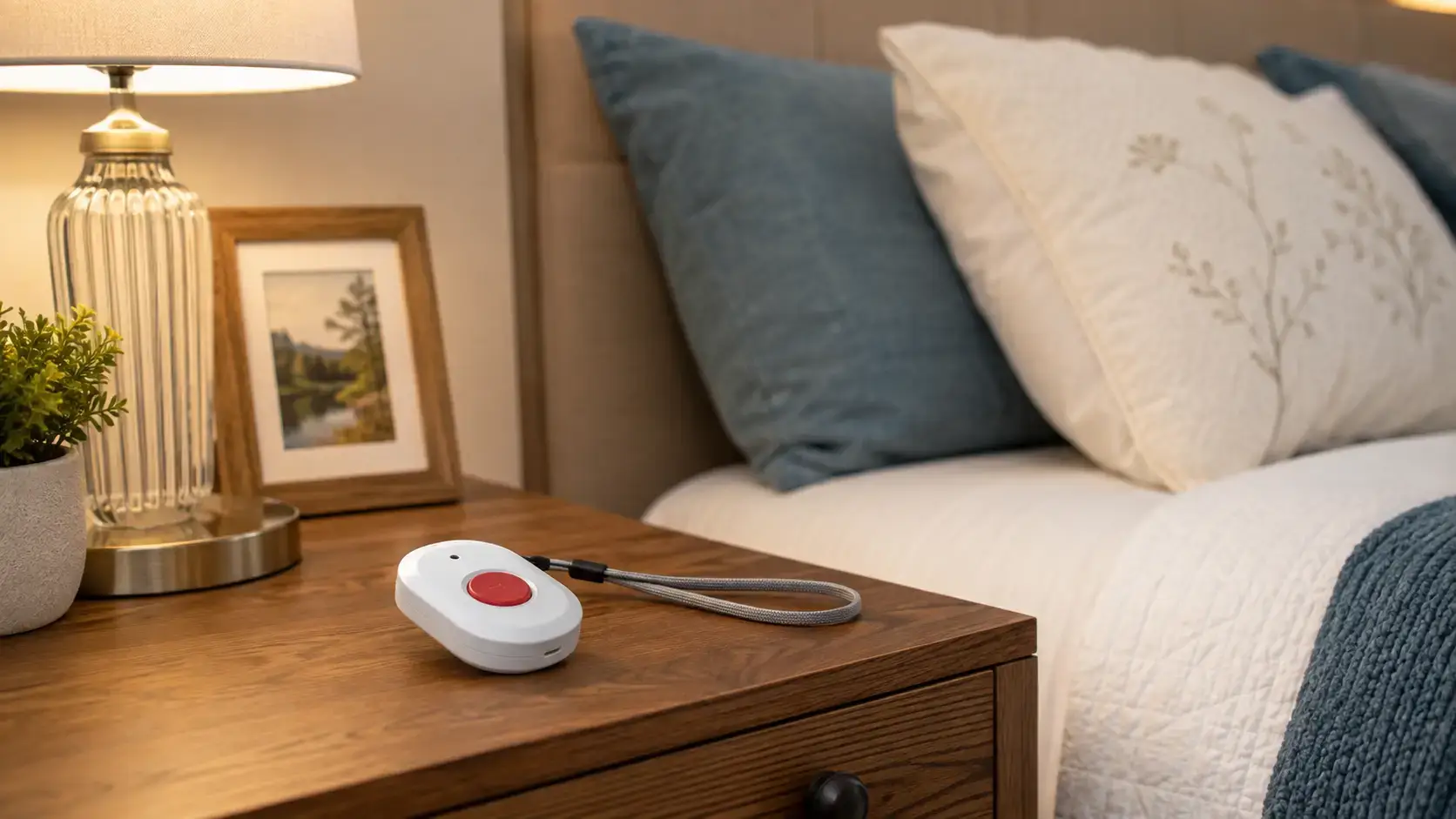
Unlike a simple alarm, an AI fall detection solution can combine several types of information: sudden movement, unusual posture, prolonged immobility, impact noise, or a call for help. The goal is to improve early detection while reducing false alerts.
Key takeaways
Why fast detection can change the outcome
According to the World Health Organization, falls are the second leading cause of unintentional injury deaths worldwide, and adults over 60 suffer the greatest number of fatal falls.
In the United States, the CDC reports that more than one in four older adults falls each year, and that falling once doubles the risk of falling again.
In this context, every minute matters. An undetected fall can lead to prolonged pain, stress, hypothermia, medical complications, hospitalization, or loss of independence. Technology does not replace human intervention, but it can help trigger alerts earlier.
What AI really changes
Why reliability matters as much as speed
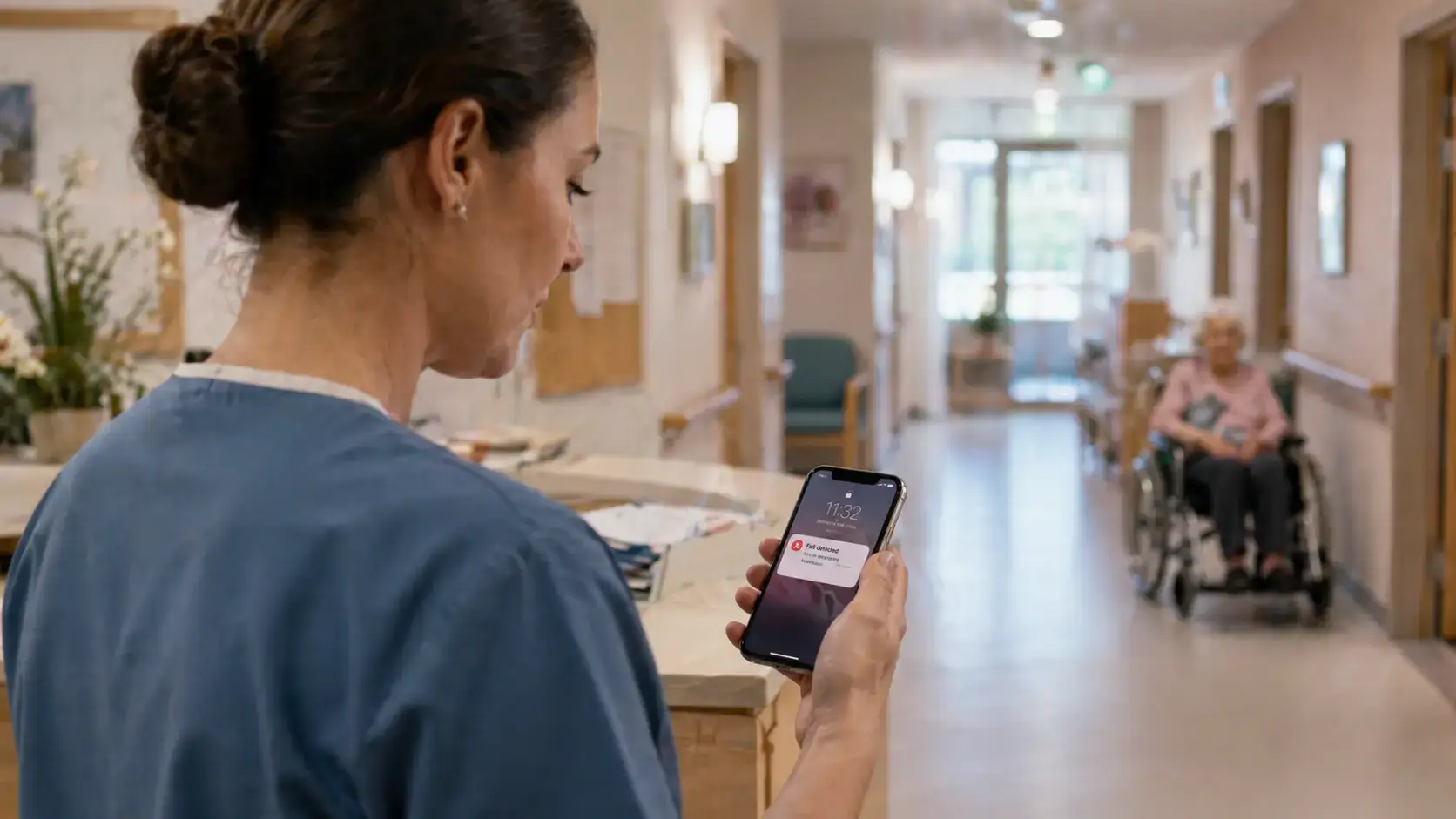
Detecting quickly is not enough. In care facilities, too many unnecessary alerts can exhaust teams and reduce trust in the system. An effective solution must therefore achieve two goals: alert quickly when the situation is critical, and avoid disturbing teams for non-relevant events.
This is where AI becomes strategic. By combining several signals, it can help reduce false positives and send more targeted alerts.
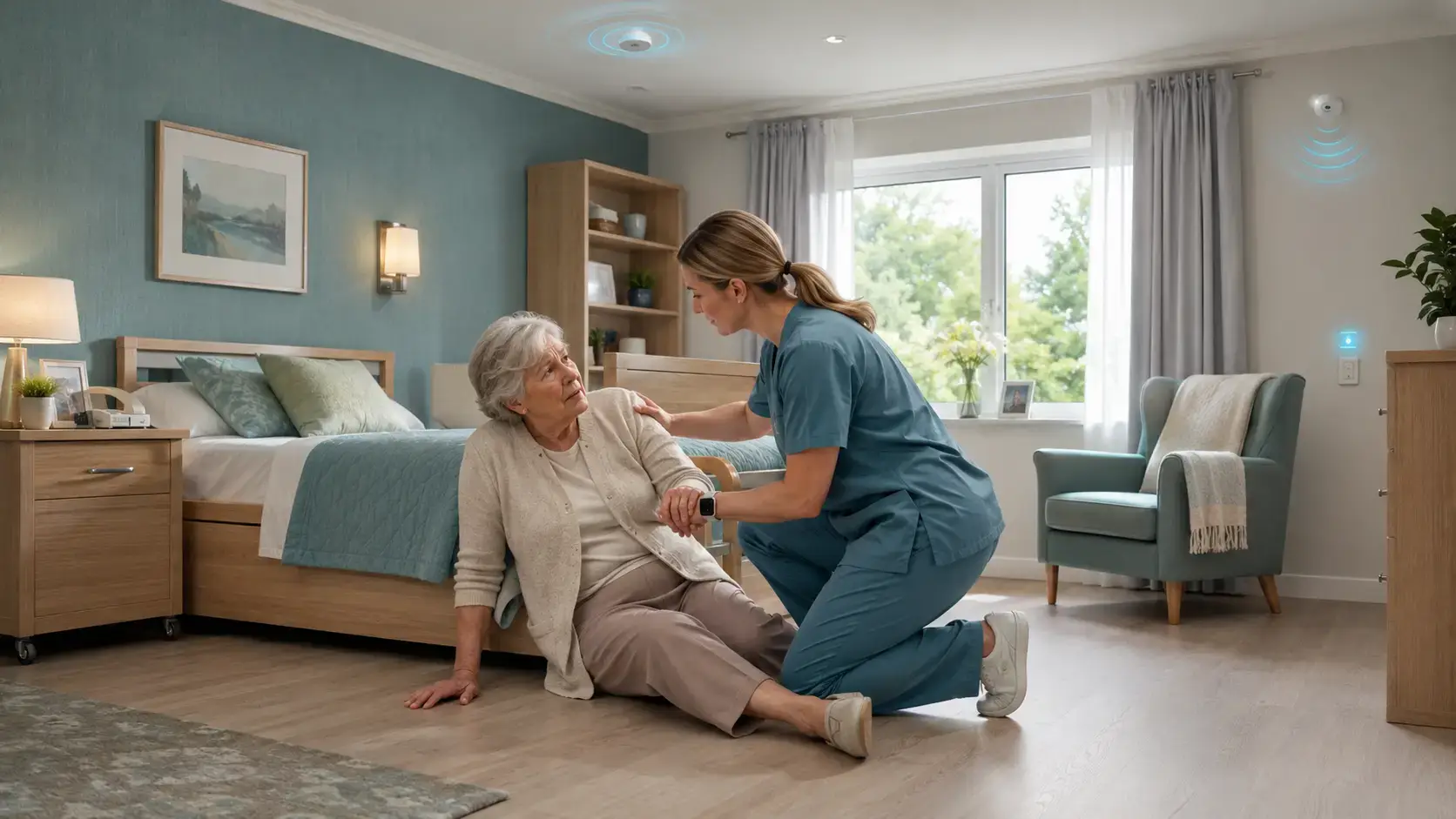
Useful technology must remain discreet
The World Health Organization highlights that AI in health should be guided by ethical principles, so that it serves the public interest while limiting the risks linked to its use.
For NestSentinel, this requirement is central: developing intelligent detection technology capable of protecting seniors and vulnerable individuals, without video cameras, without mandatory wearable devices, and without any action required from the resident.
The goal is not to monitor more. The goal is to protect better, with discreet, reliable, and privacy-respecting technology.
Discover RoomGuardian by NestSentinel
AI can help fall-detection systems move beyond simple event recognition. By analysing several signals together, it can provide care teams with a better understanding of what happened and help them identify situations that may require attention.
This is the approach behind RoomGuardian. Its locally processed AI combines multiple non-intrusive sensing technologies to detect falls, assess contextual signals and identify other emerging risks, such as prolonged immobility, unusual posture changes or calls for help.
Discover how RoomGuardian uses AI to support earlier, more relevant intervention—without video cameras, wearables or action required from residents.