
Soft fall detection: why some systems miss slow falls?

Not every fall involves a sudden impact. Soft falls can occur when an older adult slowly slides, collapses or lowers toward the floor, creating a major challenge for conventional fall detection systems.

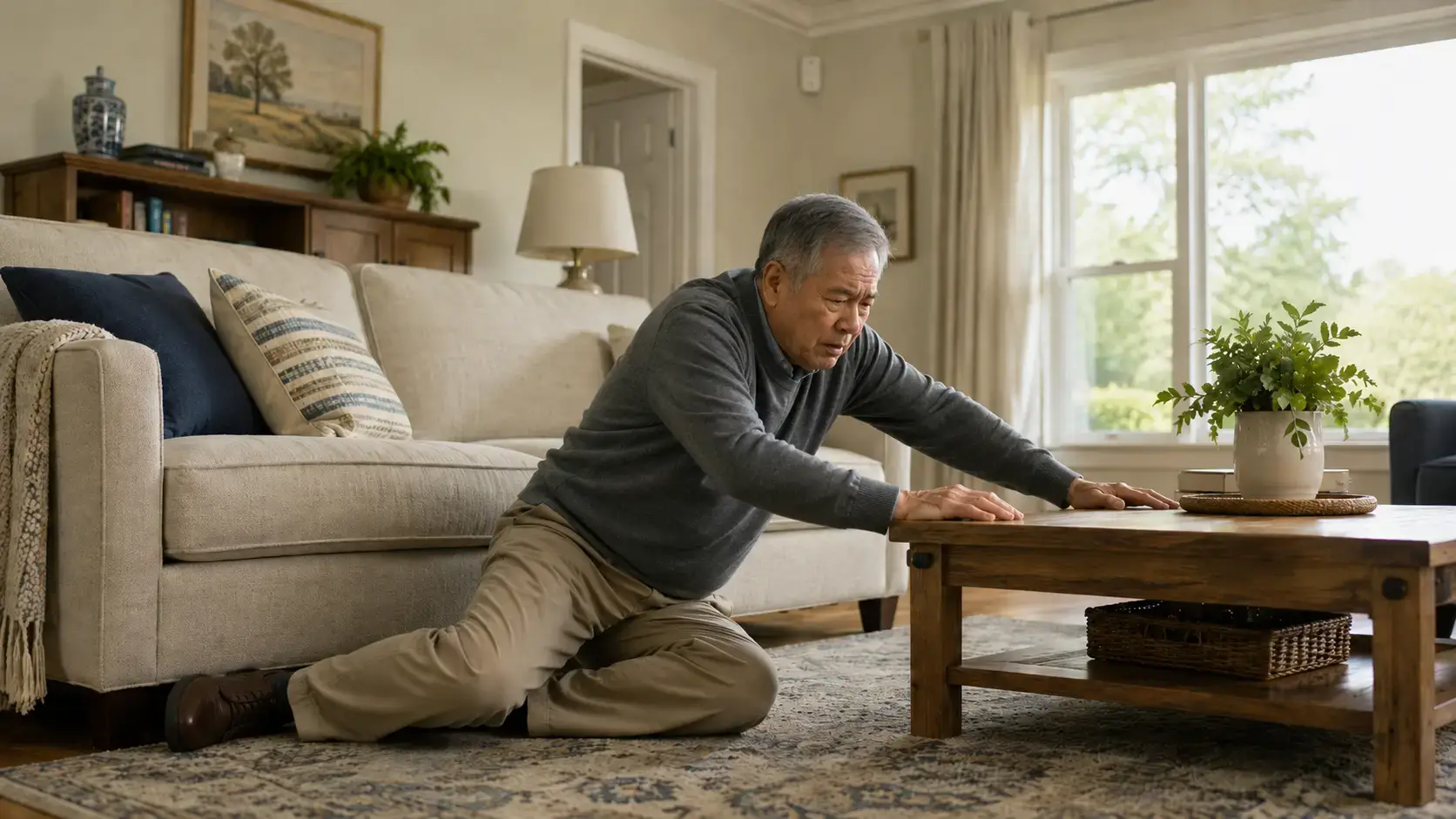
Older adult unable to get up after a slow fall

Soft fall detection: why some systems miss slow falls?

Not every fall is a sudden, high-impact event. Some older adults gradually slide against furniture, collapse slowly or reach the floor with little noise, making these events particularly difficult for conventional fall detection systems to identify.

👉 Get my free checklist
Protect my loved one in under 5 minutes

What is a soft fall?

A soft fall is an informal term used to describe a slow or low-impact descent in which a person reaches the floor without the sharp acceleration or loud impact typically associated with a conventional fall.

For example, an older adult may:

  • slide down a wall or piece of furniture;
  • lose strength while standing and gradually collapse;
  • slip from the edge of a bed or chair;
  • lower themselves toward the floor while trying to regain balance;
  • remain seated or lying on the ground after a slow descent.


Soft fall” is not a universally standardized clinical category. However, it describes an important technical challenge: an event can still leave someone unable to get up even when it produces no obvious impact signature.

Key takeaways

  • Soft falls may occur without sudden acceleration or a loud impact.
  • Threshold-based wearables can miss events that do not generate a strong motion signal.
  • Audio and isolated motion sensors may lack enough context to confirm a slow fall.
  • Manual alert devices cannot help when they are inaccessible or cannot be activated.
  • Combining trajectory, posture, presence and post-fall immobility can provide a more complete assessment.

Why can wearables miss slow falls?

Many wearable fall detectors use accelerometers and gyroscopes to recognise rapid changes in movement, orientation or impact. Threshold-based systems often look for acceleration exceeding a predefined level.

This approach can identify many conventional falls, but low-impact events may not cross the required threshold. Lowering the threshold may improve sensitivity, yet it can also increase false alerts caused by ordinary activities such as sitting abruptly or lying down. Research therefore frequently combines acceleration with post-fall posture or additional parameters to distinguish genuine falls from daily activities.

Wearables also depend on correct placement and consistent use. Reviews of fall detection devices have identified real-world acceptance, adherence and validation among older adults as continuing limitations.
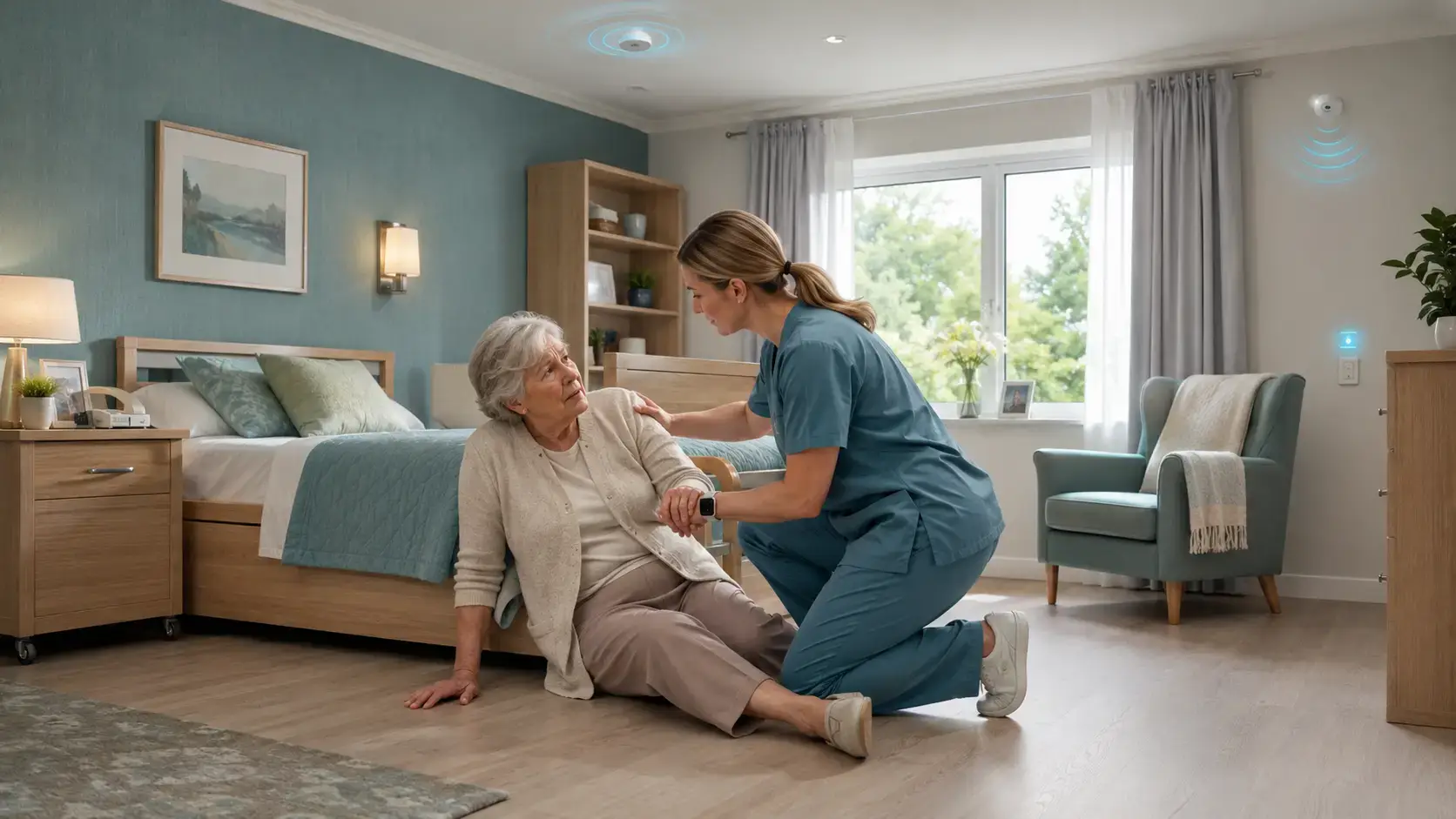
Caregiver assisting an elderly resident after a fall
AI-generated illustration.

Why are impact sounds and motion sensors insufficient?

Audio-based systems may recognise a loud impact or distress call. A slow fall, however, can be almost silent—especially when furniture, clothing or a wall slows the descent.

Basic motion sensors can detect movement or occupancy but may not understand posture. A sensor might determine that movement has stopped without knowing whether the person is safely seated, resting in bed or lying unexpectedly on the floor.

This illustrates a broader limitation of single-sensor detection: one signal rarely provides the full context. Reviews of fall detection technologies report persistent challenges involving false alarms, real-world testing and the distinction between falls and normal daily activities.

How can contextual detection identify a soft fall?

Rather than relying on a single impact, contextual detection looks at several changes occurring around the event, such as an unusual descent, a floor-level posture or prolonged immobility.

By combining complementary non-video signals, the system can assess the situation more reliably than a single sensor acting alone, while preserving the person’s privacy. This is the principle behind RoomGuardian by NestSentinel, which is being designed to detect risk situations through contextual, multi-sensor analysis rather than depending on one isolated trigger.

Sources and references

  • Igual et al.Challenges, Issues and Trends in Fall Detection Systems.
  • Hu et al.Radar-Based Fall Detection: A Survey.

FAQ: about soft fall detection

Not necessarily. Even without a severe impact, the person may be injured, unable to stand or left on the floor for an extended period.

Some devices may, but detection depends on the movement pattern, sensor placement and algorithm. A gradual descent may not generate the expected acceleration threshold.

No. Soft falls may produce little or no distinctive sound, and background noise can make isolated audio signals difficult to interpret.

Continued presence at floor level with little movement provides important context, especially when the descent itself was gradual.

Share the Post:

Related Posts

NestSentinel Logo Claim - full white

🎁 Free checklist • Spot hidden risks in minutes

Help prevent fall risks before they happen...

🚀 Download your free checklist of the 25 hidden hazards and spot risks in just a few minutes.

Start making your loved one’s home safer — today:

*No spam, ever. Unsubscribe anytime with just one click.

NestSentinel Logo Claim - full white

🎁 Checklist gratuite • Repérez les risques rapidement

Prévenez les risques de chute avant qu’ils ne surviennent...

🚀 Téléchargez votre checklist gratuite des 25 dangers cachés et repérez les risques en quelques minutes.

Sécurisez leur logement dès aujourd’hui :

*Promis, pas de spam. Désabonnement en un clic à tout moment.

Leave a Reply

Your email address will not be published. Required fields are marked *