
Bathrooms combine wet surfaces, transfers, confined spaces and highly private activities. Effective bathroom fall detection must therefore provide timely alerts without introducing intrusive monitoring.
What is bathroom fall detection?
Bathroom fall detection is the use of sensors or connected devices to identify when an older adult may have fallen or remained abnormally immobile in a bathroom or toilet area.
The challenge is not limited to detecting a sudden impact. A person may slide slowly against a wall, lose balance while standing from the toilet or remain on the floor without calling for help.
Key takeaways
Why are bathrooms particularly risky for older adults?
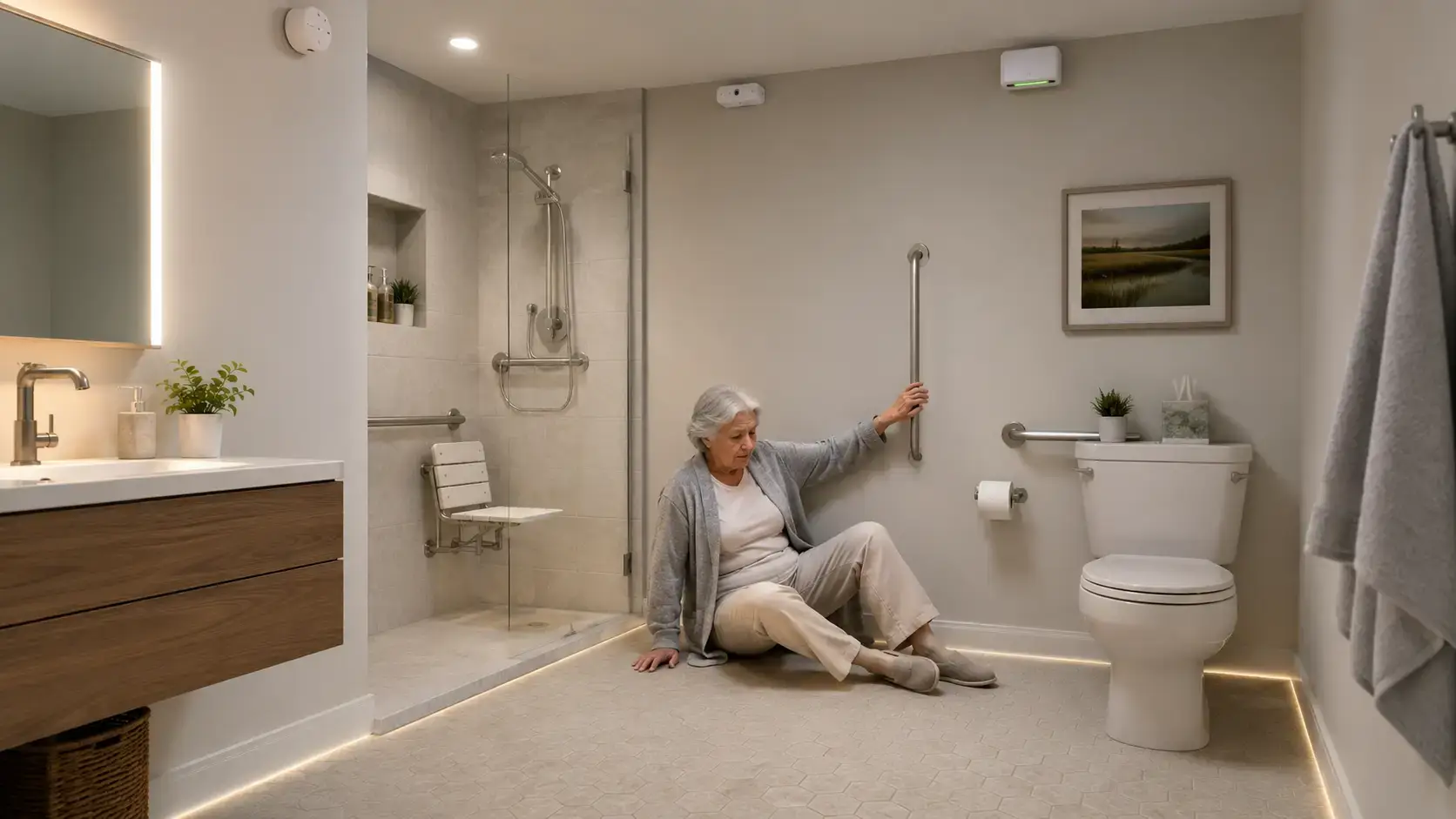
Which technologies can detect bathroom falls?
Wearables and emergency buttons
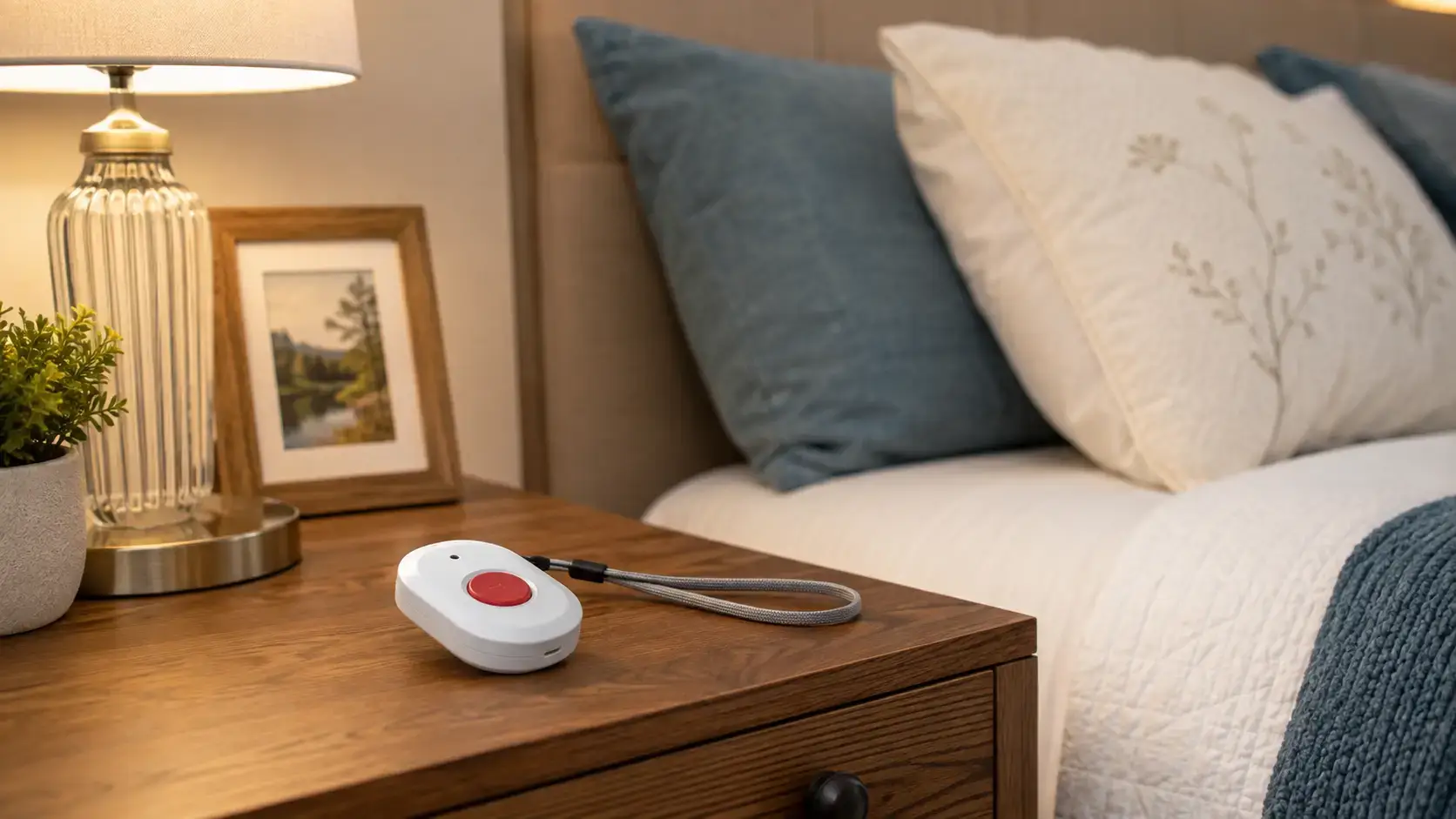
Bracelets, pendants and pull cords allow a person to request assistance. However, they only work when worn, charged, within reach or manually activated. Confusion, pain or loss of consciousness can make activation impossible.
Motion and occupancy sensors
Motion, door or pressure sensors can identify bathroom entry, prolonged occupancy or unusual inactivity. They provide useful context but may struggle to determine whether a fall has actually occurred when used alone.
Radar-based detection
Radar can analyse presence, movement and changes in position without capturing conventional video images. It can therefore be more appropriate than RGB cameras in privacy-sensitive environments.
Thermal sensing
Low-resolution thermal sensing detects heat patterns and posture rather than identifiable facial details. It may help identify a person lying on the floor while avoiding standard video recording.
Multi-sensor detection
A multi-sensor system can compare several signals, such as a posture change, downward movement, prolonged immobility and continued presence. This contextual analysis can help distinguish a genuine risk situation from normal bathroom activity and reduce unnecessary alerts.
Detection must complement prevention
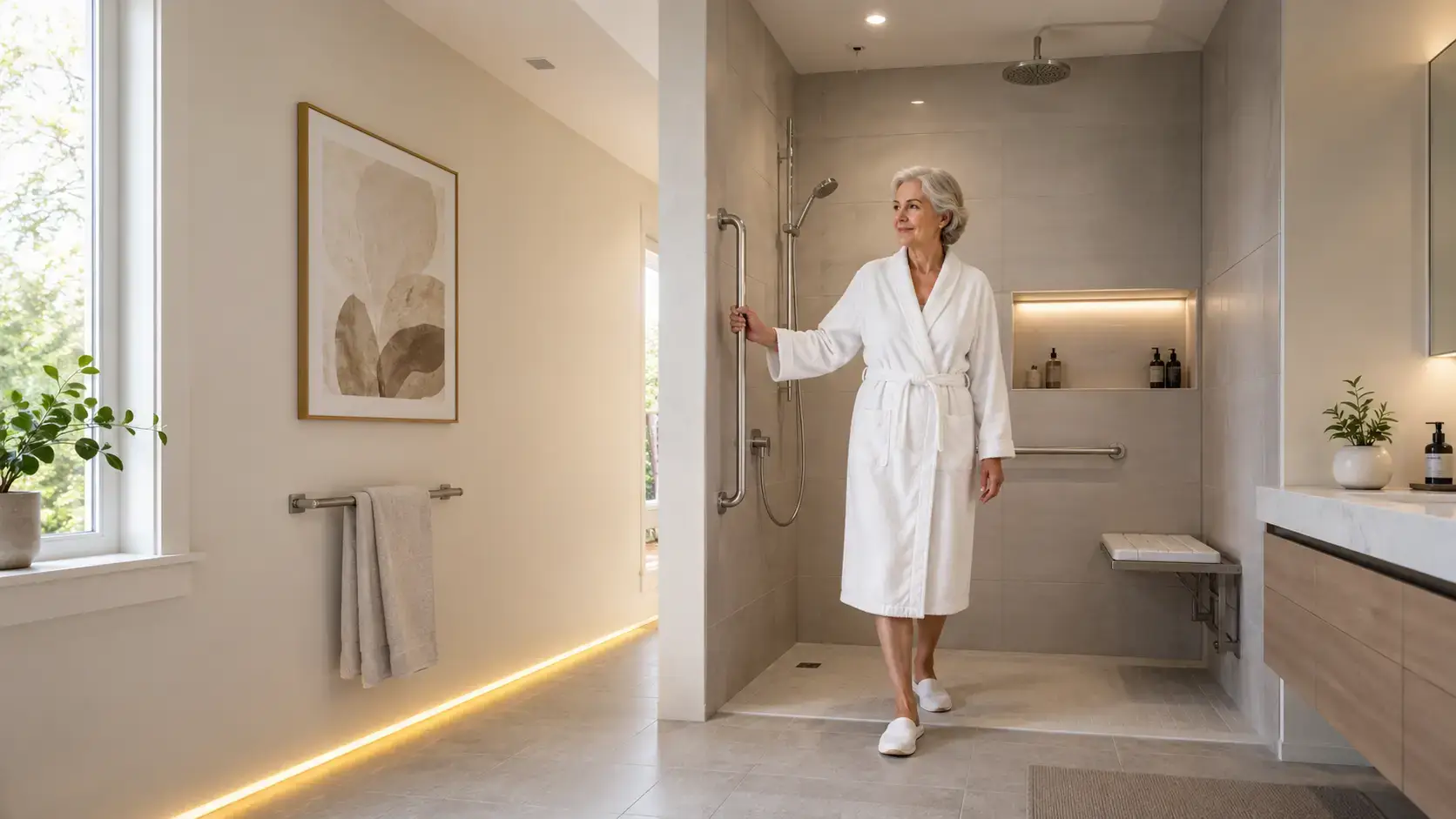
Technology does not replace bathroom fall prevention. Grab bars, non-slip surfaces, accessible showers, suitable lighting, medication reviews, vision checks and strength or balance exercises remain essential.
Fall detection like RoomGuardian adds another layer: reducing the delay between an incident and assistance when preventive measures are not enough.