
Bathroom fall detection for older adults: key technologies

Bathrooms present specific fall risks for older adults. Discover how radar, thermal sensing and multi-sensor technologies can support faster detection while preserving privacy.

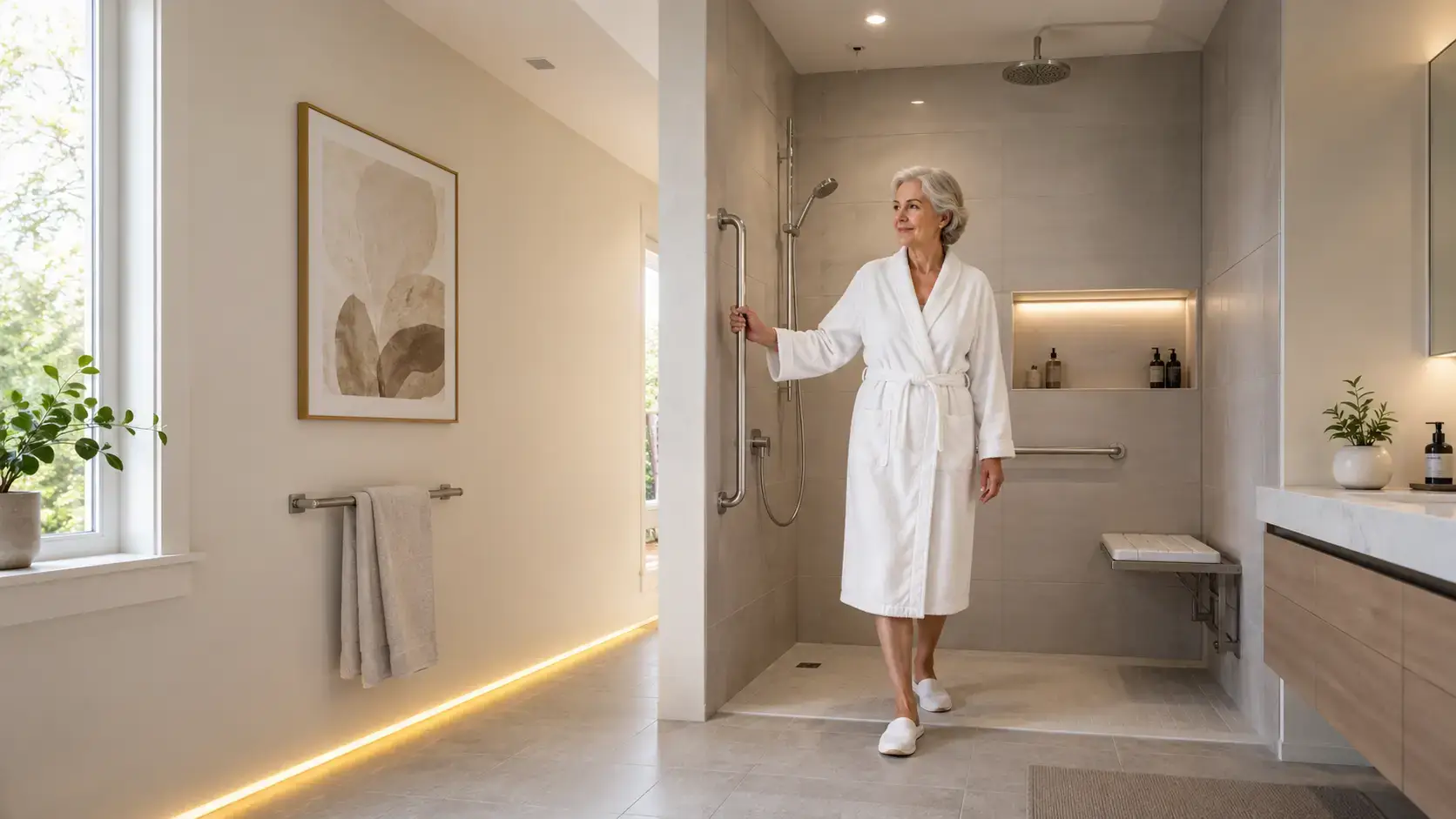
Independent older adult in a safer bathroom

Bathroom fall detection for older adults: key technologies

Bathrooms combine wet surfaces, transfers, confined spaces and highly private activities. Effective bathroom fall detection must therefore provide timely alerts without introducing intrusive monitoring.

👉 Get my free checklist
Protect my loved one in under 5 minutes

What is bathroom fall detection?

Bathroom fall detection is the use of sensors or connected devices to identify when an older adult may have fallen or remained abnormally immobile in a bathroom or toilet area.

The challenge is not limited to detecting a sudden impact. A person may slide slowly against a wall, lose balance while standing from the toilet or remain on the floor without calling for help.

Key takeaways

  • Bathrooms combine several environmental and physical fall risks.
  • Falls in bathrooms may be more likely to cause injury than falls in some other rooms.
  • Video cameras are particularly intrusive in bathrooms and toilet areas.
  • Wearables and call buttons depend on being worn, accessible and activated.
  • Radar, thermal sensing and multi-sensor analysis can support non-intrusive detection.

Why are bathrooms particularly risky for older adults?
More than one in four adults aged 65 and older reports falling each year. Falls are also the leading cause of injury among older adults in the United States.

Bathrooms create a distinctive combination of hazards:

  • wet or slippery floors;
  • transfers into and out of showers or bathtubs;
  • repeated sitting, standing and turning;
  • limited space and hard surfaces;
  • poor nighttime lighting;
  • urgency when using the toilet.


In one study of older adults at high risk, bathroom falls were more than twice as likely to cause injury as falls occurring in the living room.

Toileting-related falls are also associated with gait instability, urinary incontinence, cognitive impairment and visual impairment.

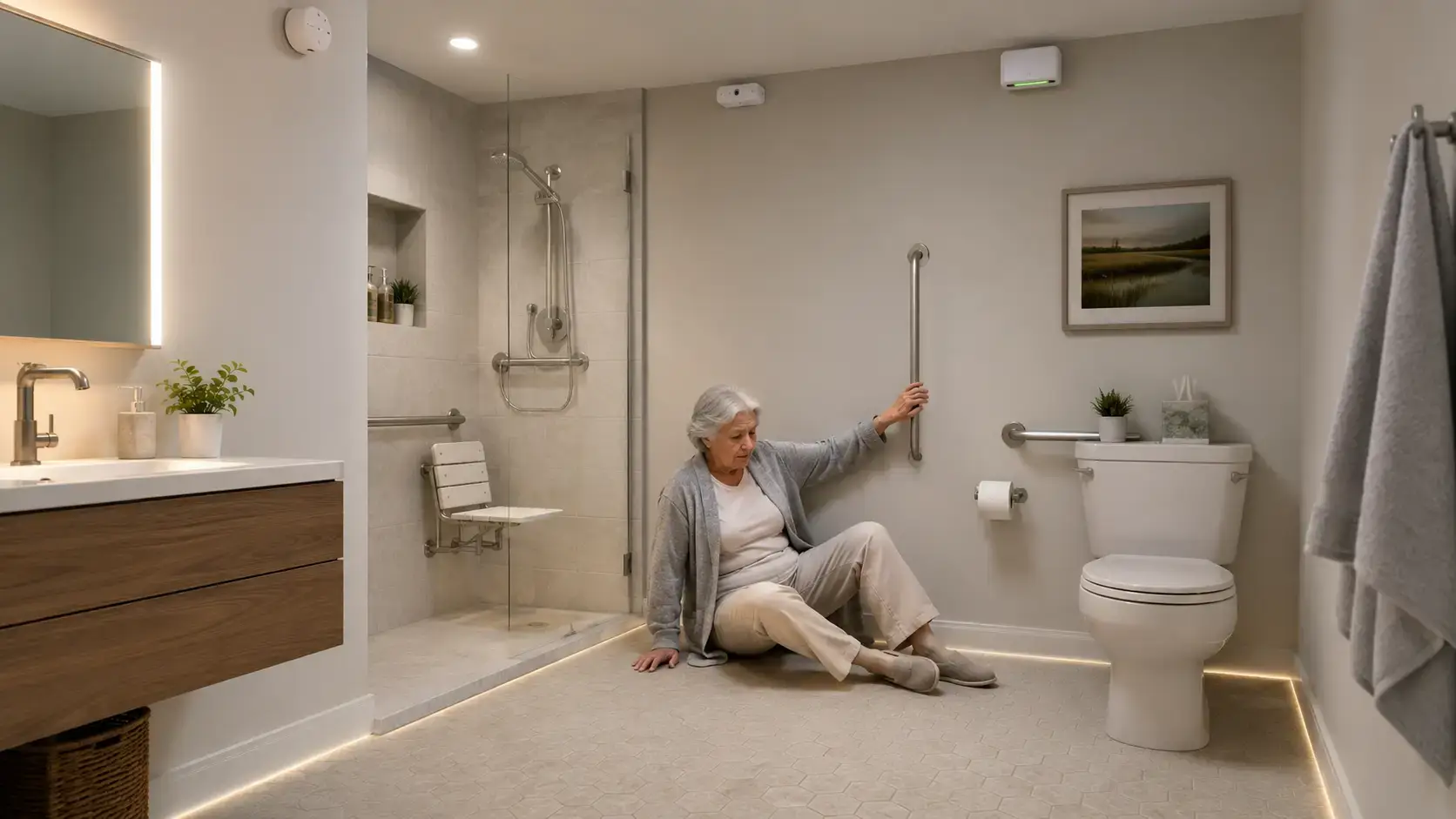
Bathroom fall detection after a fall
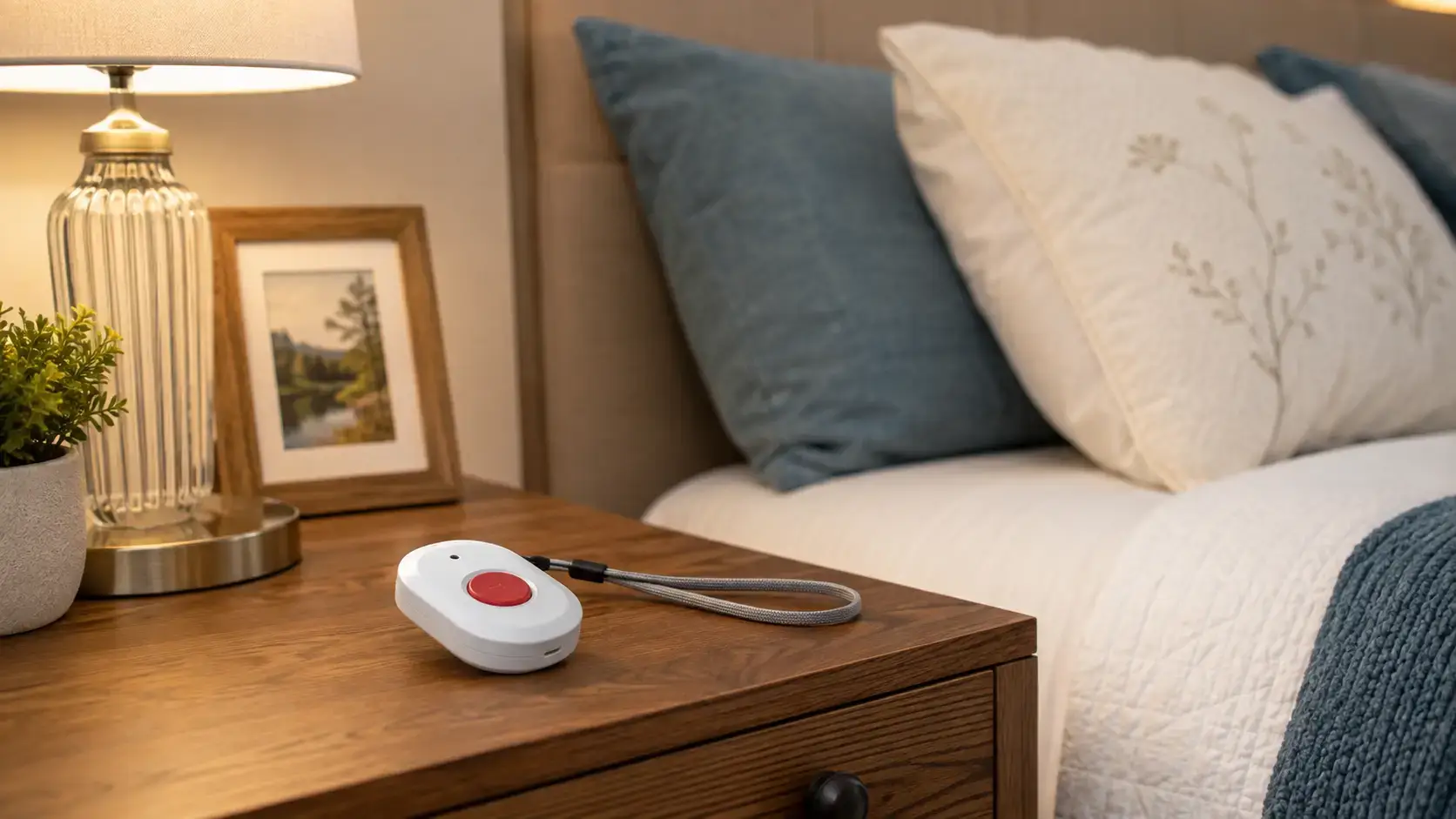
AI-generated illustration.

Which technologies can detect bathroom falls?

Wearables and emergency buttons

Bracelets, pendants and pull cords allow a person to request assistance. However, they only work when worn, charged, within reach or manually activated. Confusion, pain or loss of consciousness can make activation impossible.

Motion and occupancy sensors

Motion, door or pressure sensors can identify bathroom entry, prolonged occupancy or unusual inactivity. They provide useful context but may struggle to determine whether a fall has actually occurred when used alone.

Radar-based detection

Radar can analyse presence, movement and changes in position without capturing conventional video images. It can therefore be more appropriate than RGB cameras in privacy-sensitive environments.

Thermal sensing

Low-resolution thermal sensing detects heat patterns and posture rather than identifiable facial details. It may help identify a person lying on the floor while avoiding standard video recording.

Multi-sensor detection

A multi-sensor system can compare several signals, such as a posture change, downward movement, prolonged immobility and continued presence. This contextual analysis can help distinguish a genuine risk situation from normal bathroom activity and reduce unnecessary alerts.

Detection must complement prevention

Technology does not replace bathroom fall prevention. Grab bars, non-slip surfaces, accessible showers, suitable lighting, medication reviews, vision checks and strength or balance exercises remain essential.

Fall detection like RoomGuardian adds another layer: reducing the delay between an incident and assistance when preventive measures are not enough.

Sources and references

FAQ: about bathroom fall detection

Yes. Radar, thermal sensing, pressure sensors and other non-video technologies can detect movement, presence or posture without recording standard video.

No. Its effectiveness depends on the device being worn, charged and capable of detecting the event or being manually activated.

One signal may be ambiguous. Combining movement, posture, presence and immobility can provide more context before an alert is generated.

Yes. The same principles apply in both settings, but the configuration may differ according to room layout, staffing, alert workflows and the level of integration required.

Share the Post:

Related Posts

NestSentinel Logo Claim - full white

🎁 Free checklist • Spot hidden risks in minutes

Help prevent fall risks before they happen...

🚀 Download your free checklist of the 25 hidden hazards and spot risks in just a few minutes.

Start making your loved one’s home safer — today:

*No spam, ever. Unsubscribe anytime with just one click.

NestSentinel Logo Claim - full white

🎁 Checklist gratuite • Repérez les risques rapidement

Prévenez les risques de chute avant qu’ils ne surviennent...

🚀 Téléchargez votre checklist gratuite des 25 dangers cachés et repérez les risques en quelques minutes.

Sécurisez leur logement dès aujourd’hui :

*Promis, pas de spam. Désabonnement en un clic à tout moment.

Leave a Reply

Your email address will not be published. Required fields are marked *