
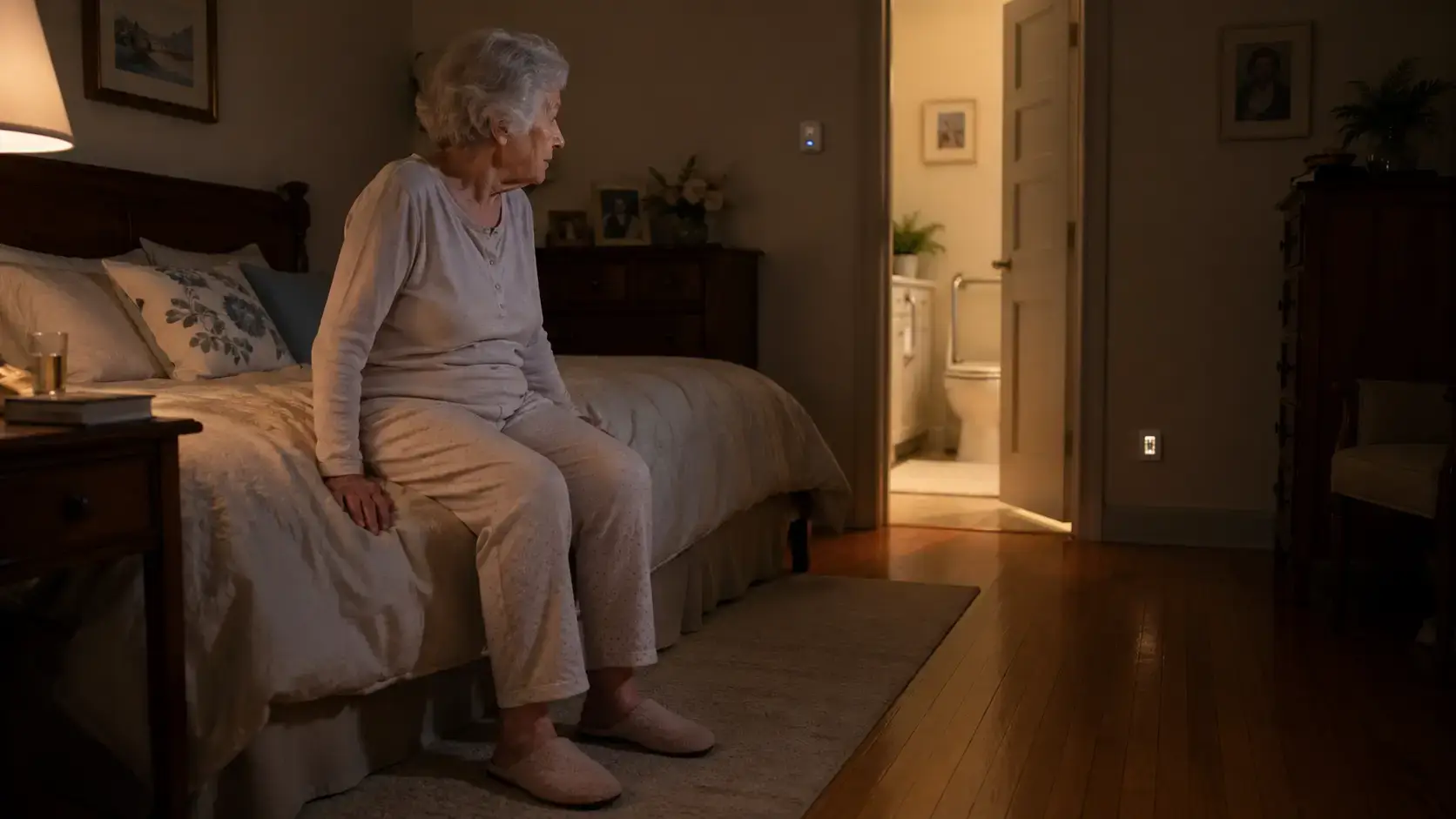
Nighttime fall detection for seniors: an underestimated danger

Nighttime falls are particularly concerning for seniors because they often happen during moments of high vulnerability: getting out of bed, darkness, disorientation, or absence of witnesses.
Nighttime Fall Risk Senior Safety Detection

Nighttime fall detection for seniors: an underestimated danger

Nighttime falls are particularly concerning for seniors because they often happen during moments of high vulnerability: getting out of bed, darkness, disorientation, or absence of witnesses. For families and care facilities, preventing them has become a major issue for home safety, risk prevention, and early detection.

👉 Get my free checklist
Protect my loved one in under 5 minutes

What is a nighttime fall in an older adult?

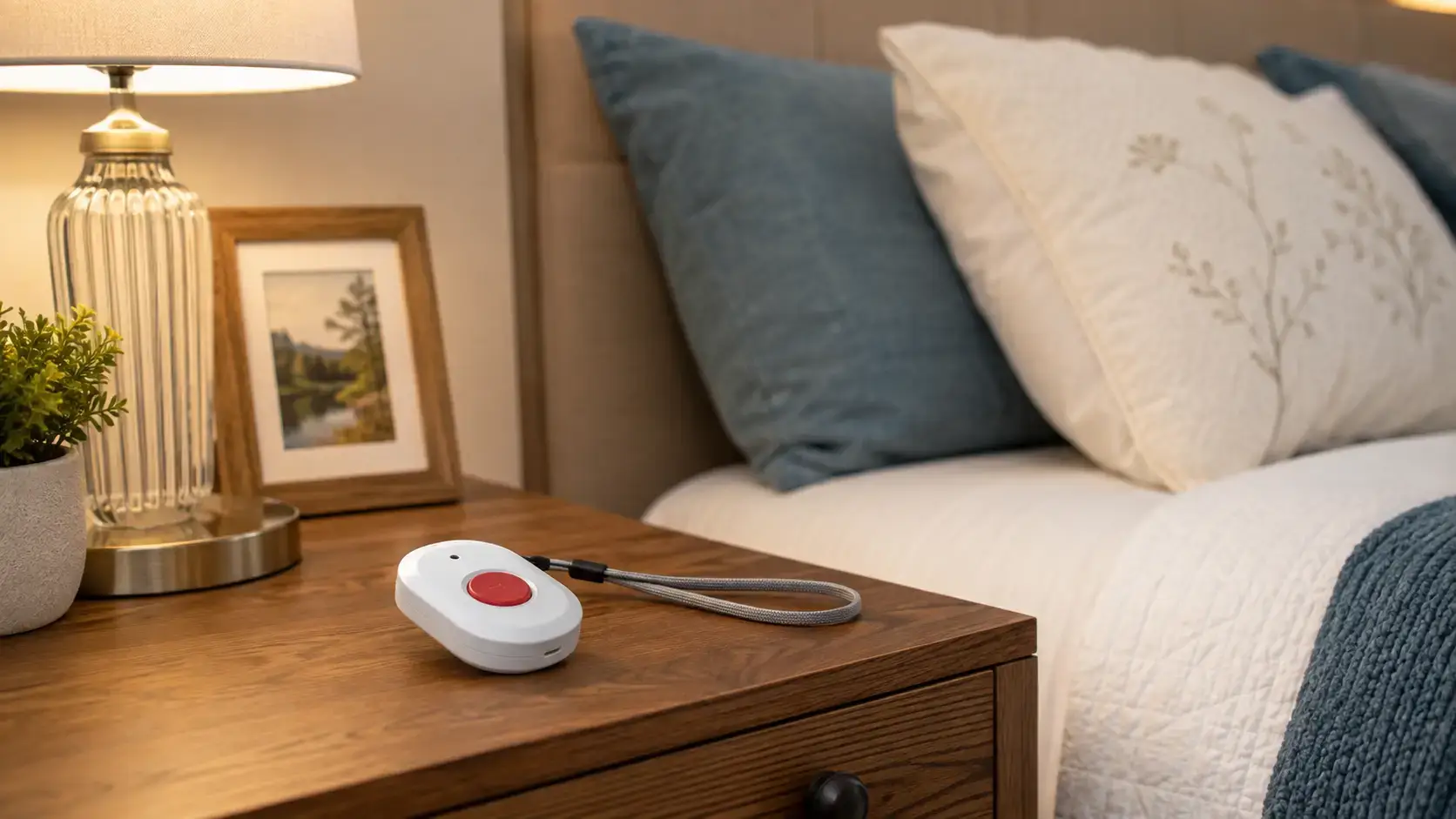
A nighttime fall is a fall that occurs during the night, often while moving between the bed, bathroom, toilet, or another living area.

For seniors and vulnerable individuals, these falls can be harder to detect quickly, especially when the person lives alone or stays in an individual room in a nursing home or care environment.

Key takeways

  • Nighttime falls are often less visible but can have serious consequences.
  • Nighttime bathroom trips, fatigue, balance issues, and poor lighting increase the risk.
  • Fast intervention after a fall is essential.
  • Safety technologies can help detect risk situations earlier.

Why nighttime falls are dangerous

Falls are already a major risk for older adults. The World Health Organization states that falls are the second leading cause of unintentional injury deaths worldwide, and that adults over 60 suffer the greatest number of fatal falls.

The risk is even greater at night because a fall may remain undetected for several minutes, or even longer. The later the intervention, the heavier the consequences can be: prolonged pain, hypothermia, dehydration, stress, medical complications, or loss of confidence.

In the United States, the CDC reports that more than one in four older adults falls each year, and that falling once doubles the risk of falling again. These figures show that every fall should be treated as a warning sign, especially when it happens in a low-visibility moment.

The most common nighttime risk situations

Nighttime falls often happen in very ordinary daily situations:

  • getting up to go to the bathroom;
  • looking for an object in the dark;
  • walking without mobility support;
  • feeling disoriented after waking up;
  • tripping on a rug, cable, or obstacle;
  • losing balance when getting out of bed.


Public health guidance recommends regularly assessing fall risk in older adults and adapting prevention measures to the person’s level of risk.

Why vulnerable individuals are more exposed

With age, several factors can combine: reduced vision, lower muscle strength, balance disorders, medication, fatigue, cognitive impairment, or reduced mobility.

In home safety as well as in nursing homes, the issue is not only the fall itself. It is also the absence of witnesses, the delay in response, and the difficulty of distinguishing a normal situation from a genuinely concerning one.
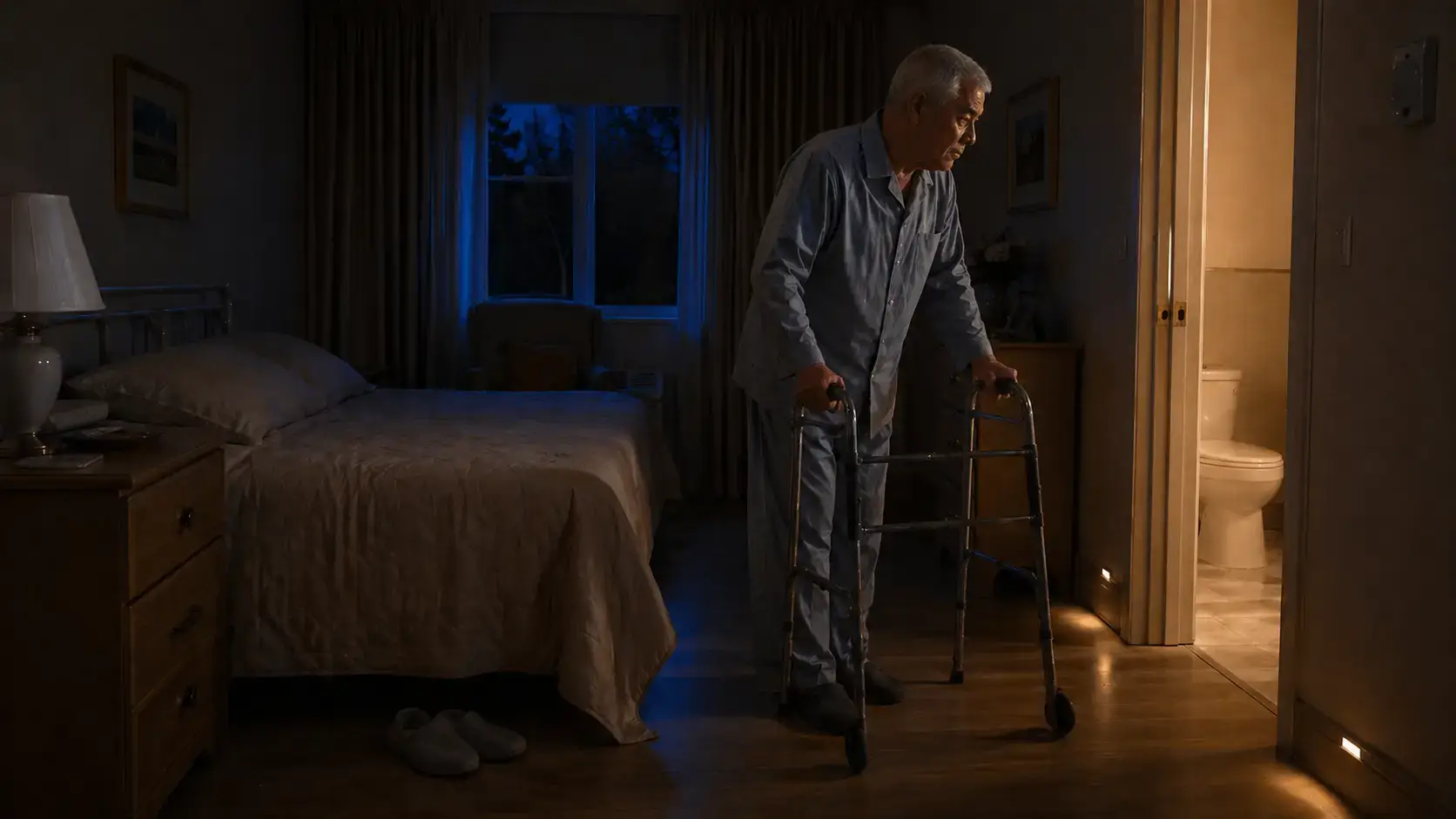
Nighttime Senior Safety Walker Bathroom Risk

Prevention and detection: two complementary priorities

Preventing nighttime falls starts with simple actions:

  • improve nighttime lighting;
  • keep walking areas clear;
  • secure the bed and access to the bathroom;
  • remove obstacles from the floor;
  • adapt mobility aids;
  • reassess individual fall risk regularly.


But prevention is not always enough. This is why early detection becomes essential. Discreet technologies can help identify a fall, prolonged immobility, or an abnormal situation without requiring intrusive cameras or any specific action from the person.

The goal is clear: detect earlier, alert faster, and enable a more targeted intervention.

Follow NestSentinel

Solutions designed to improve safety and prevent risks for seniors and vulnerable individuals are evolving rapidly thanks to technological innovation.

But even before using AI-powered solutions, there’s already a lot you can do to make your home safer.

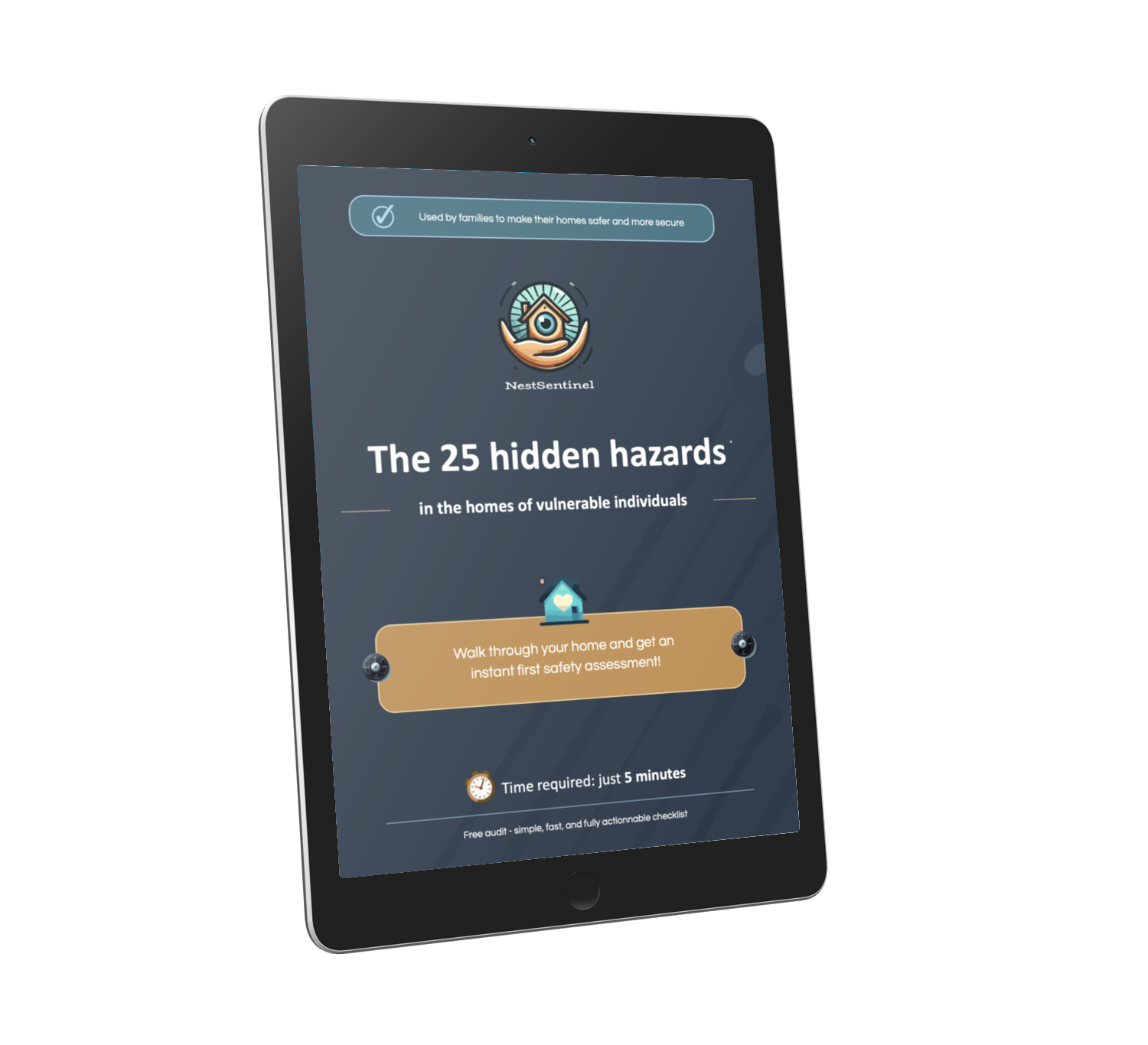
👉 To help you take a first step, download our free checklist of the 25 hidden hazards and identify risks in just a few minutes.

Sources and references

FAQ: about nighttime fall

Because they often happen during nighttime movements, with fatigue, poor lighting, disorientation, or balance issues.

By securing walking areas, improving lighting, removing obstacles, and regularly assessing fall risk.

Yes. Individual rooms and nighttime bathroom trips make fast detection particularly important in care facilities.

Yes, when it enables reliable, discreet, and privacy-respecting detection.

Share the Post:

Related Posts

🎁 Free checklist ‱ Spot hidden risks in minutes

Is your loved one truly safe at home?

🚀 Download your free checklist of the 25 hidden hazards and spot risks in just a few minutes.

Start making your loved one’s home safer — today:

*No spam, ever. Unsubscribe anytime with just one click.

🎁 Checklist gratuite ‱ RepĂ©rez les risques rapidement

Vos proches sont-ils vraiment en sécurité chez eux ?

🚀 TĂ©lĂ©chargez votre checklist gratuite des 25 dangers cachĂ©s et repĂ©rez les risques en quelques minutes.

SĂ©curisez leur logement dĂšs aujourd’hui :

*Promis, pas de spam. Désabonnement en un clic à tout moment.

Leave a Reply

🎁 Free checklist ‱ Spot hidden risks in minutes

Is your loved one truly safe at home?

🚀 Download your free checklist of the 25 hidden hazards and spot risks in just a few minutes.

Start making your loved one’s home safer — today:

*No spam. Unsubscribe anytime with one click.

🎁 Checklist gratuite ‱ RepĂ©rez les risques rapidement

Vos proches sont-ils vraiment en sécurité chez eux ?

🚀 TĂ©lĂ©chargez votre checklist gratuite des 25 dangers cachĂ©s et repĂ©rez les risques en quelques minutes.

SĂ©curisez leur logement dĂšs aujourd’hui :

*Promis : zéro spam. Désinscription en un clic à tout moment.

đŸ‘‹đŸ» Wait
 leaving already?

🚀 Before you go
 Download your free checklist of the 25 hidden hazards in the homes of vulnerable individuals.

Identify risks in just a few minutes and start protecting your loved ones today.

What you’ll discover:

*No spam. Unsubscribe anytime with one click.

đŸ‘‹đŸ» Attendez
 vous partez dĂ©jĂ  ?

🚀 Avant de partir
 TĂ©lĂ©chargez votre checklist gratuite des 25 dangers cachĂ©s dans le domicile des personnes vulnĂ©rables.

Identifiez les risques en quelques minutes et commencez dĂšs aujourd’hui Ă  protĂ©ger vos proches.

Ce que vous allez découvrir :

*Promis : zéro spam. Désinscription en un clic à tout moment.